
Guatemalan magnolia
Magnolia guatemalensis
Description
Growing requirements
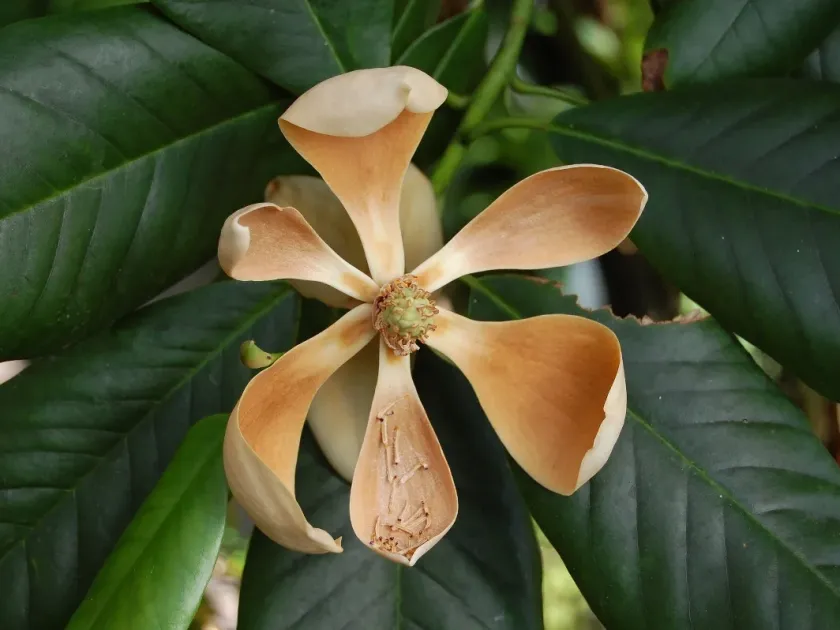
The Guatemalan magnolia (Magnolia guatemalensis) is a prominent member of the Magnoliaceae family, known for its status as an endangered evergreen tree species. It features broad, glossy leaves and delicate flowers typical of its genus, often reaching substantial dimensions in its natural habitat.
Originating from the cloud forests of Central America, specifically within Guatemala, Honduras, and El Salvador, this species relies on specific microclimates. It thrives in high-altitude environments where humidity remains consistently high and temperatures stay relatively cool throughout the year.
The soil requirements are strict: the tree demands deep, nutrient-rich, and well-draining soil. It is particularly intolerant of waterlogging, which often leads to root rot, suggesting that a substrate with high organic matter and excellent aeration is essential for survival.
Regarding climate, the Guatemalan magnolia requires protection from intense heat and drying winds. In managed environments, ensuring a stable environment that mimics the moisture of a cloud forest is the key to maintaining the plant's health and vigor during the establishment phase.
The use of this species is largely conservation-oriented. Due to its status on the IUCN Red List, it is primarily grown in botanical gardens and specialized research institutions to ensure the survival of the genetic pool and promote educational awareness about cloud forest biodiversity.
Main diseases and pests
The primary threat to Magnolia guatemalensis is habitat loss due to deforestation and land-use change. As its natural cloud forest ecosystem is cleared for agriculture or urban development, the fragmented populations become increasingly vulnerable to extinction.
In nursery settings, fungal pathogens are a common concern, often manifesting as leaf spots or stem blights. These issues are frequently linked to poor air circulation or over-saturation of the potting mix, emphasizing the need for proper environmental management.
Insects such as scales and spider mites present significant challenges for young trees. These pests can rapidly deplete the plant's resources, leading to stunted growth and providing entry points for secondary bacterial or fungal infections.
Integrated pest management strategies are recommended, focusing on early detection and the use of targeted treatments. Avoid heavy pesticide use, as the plant can be sensitive to chemical buildup, and prefer organic alternatives whenever possible for juvenile specimens.
Ensuring the long-term health of this magnolia species requires a balance of environmental stability and proactive monitoring. By maintaining high sanitary standards in the nursery and protecting natural habitats, we contribute to the survival of this rare and beautiful tree.