
Indian plum
Flacourtia indica (Burm. f.) Merr.
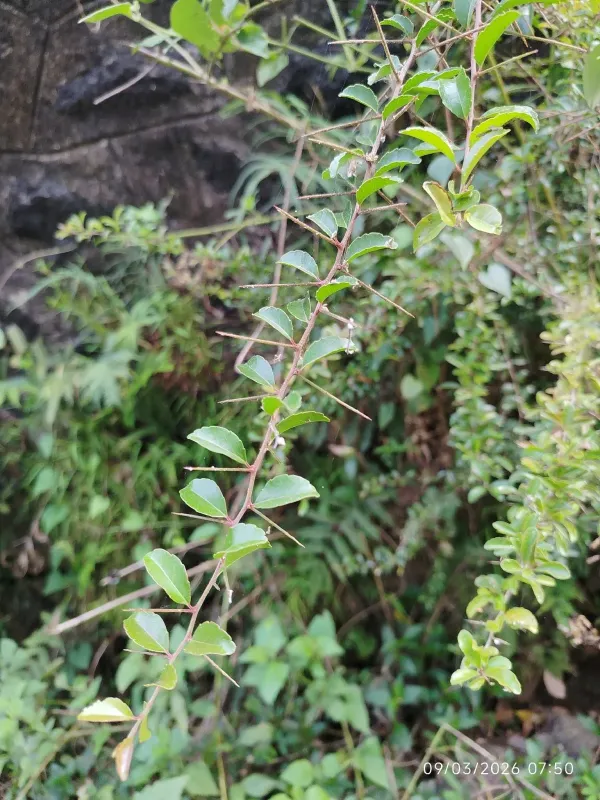
Description
Sowing dates
Flacourtia indica is primarily propagated through seeds or vegetatively via cuttings. Seeds are extracted from mature fruits, thoroughly cleaned of pulp, and sown in a well-draining nutrient-rich substrate.
The optimal time for sowing is at the beginning of the rainy season or during the spring in greenhouse conditions, ensuring temperatures consistently remain above 20-22 degrees Celsius.
To accelerate germination, seeds can undergo short-term stratification or soaking in growth stimulants, which increases the germination rate and vigor of the planting material.
When raising seedlings in nurseries, it is essential to provide sufficient spacing, as the culture grows vigorously and develops a dense canopy that requires space to expand.
Transplanting into the field is carried out after the seedlings reach 1-2 years of age, when the root system is sufficiently developed to adapt to open-field environmental conditions.
Growing requirements
Flacourtia indica belongs to the Salicaceae family and is a typical representative of tropical and subtropical flora. The plant possesses high adaptability to various growing conditions.
The culture prefers well-lit areas, as shading negatively impacts yield and the fruit maturation process. It is capable of withstanding temporary droughts due to a well-developed taproot system.
The plant has no specific soil requirements; it develops successfully in loams, sandy soils, and even rocky ground, provided there is no prolonged waterlogging.
Optimal soil pH for Flacourtia is in the neutral to slightly acidic range, which ensures the best absorption of micronutrients necessary for fruit formation.
The plant demonstrates resistance to high temperatures but is sensitive to severe frosts, which is why it is grown mainly in containers or greenhouses in temperate climate regions.
Yield
Fruiting of Flacourtia indica begins 3-5 years after planting. Yield depends heavily on pollination conditions, as the plant is a cross-pollinator.
During the peak fruiting season, a single mature tree can produce between 10 and 25 kilograms of fruit. The harvest is distributed throughout the canopy, with fruits growing in clusters or singly.
Economic use includes fresh consumption, as well as the production of jams, jellies, and pickles due to the high content of pectin substances found in the fruit.
The fruits are also used in traditional medicine and pharmacology due to the presence of antioxidants and tannins, which possess anti-inflammatory properties.
Flacourtia wood is characterized by high hardness and durability, allowing it to be used in carpentry for the production of small household items and various tools.
Main diseases and pests
The culture is relatively resistant to most pathogens; however, under high humidity, it can be affected by powdery mildew or various leaf spot diseases.
Among pests, the greatest threat is posed by sucking insects such as aphids and scale insects, which extract sap from young shoots, weakening the tree's overall development.
Fruit flies may damage ripening fruits, reducing their commercial appearance and shelf life, which necessitates active monitoring of the crop's condition.
For disease and pest control, it is recommended to conduct preventive treatments with biological products and adhere to agronomic practices, including regular sanitary pruning.
Removing dead or infected branches is a mandatory procedure that promotes better canopy ventilation and reduces the risk of fungal infection spread.
Harvesting
Harvesting Flacourtia indica fruits requires caution, as sharp thorns are often present on the branches, which can complicate the manual picking process.
The harvest is conducted as the fruits reach their characteristic dark color (ranging from dark red to near black), which indicates biological maturity and sugar accumulation.
Fruits should be harvested carefully to avoid damaging the skin, which helps extend their shelf life and prevents rot during storage and transportation.
After harvesting, it is recommended to keep the produce in a cool, well-ventilated area, as fresh fruits lose moisture quickly when exposed to direct sunlight.
For long-term storage, fruits can be processed through drying or canning, which preserves their nutritional value and organoleptic properties for an extended period.