
Macrolobium bifolium
Macrolobium bifolium
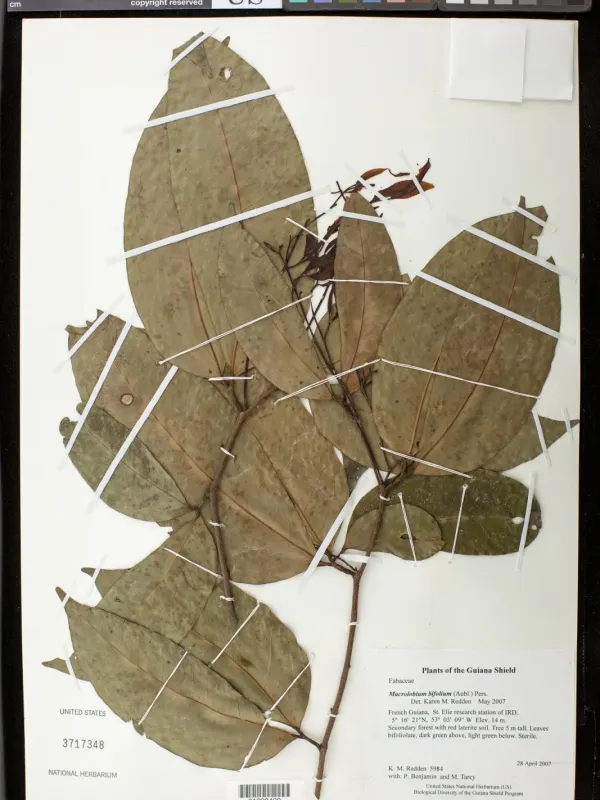
Description
Growing requirements
Macrolobium bifolium is a prominent tree species belonging to the legume family, Fabaceae. It is native to the vast tropical rainforests of South America, specifically inhabiting regions across the Amazon basin and the Guiana Shield.
Botanically, this species is recognized for its bifoliate leaves, which gave it its specific epithet. As a large tropical tree, it plays a critical role in the architectural structure of the canopy, providing habitat and resources for diverse fauna.
The climate requirements for this species are strictly equatorial, necessitating high annual rainfall and consistently warm temperatures. It does not possess adaptations for frost or drought, making it suitable only for humid tropical environments.
Regarding soil preference, Macrolobium bifolium thrives in deep, well-drained soils rich in organic matter. While it can handle riparian environments with occasional flooding, it generally prefers soils where aeration is maintained to support healthy root development.
The primary economic use of this tree is in the timber sector, where its wood is valued for its durability and structural properties. Furthermore, it serves as a keystone species in ecological restoration programs aimed at increasing canopy cover in degraded tropical lands.
Main diseases and pests
The health of Macrolobium bifolium stands can be compromised by various fungal pathogens that thrive in high-humidity conditions. These fungi are known to attack the roots and lower stems if the drainage conditions are inadequate.
Wood-boring insects present a constant threat to the integrity of the timber. Larvae of various beetle species can burrow deep into the sapwood, causing significant structural damage and creating entry points for secondary bacterial infections.
Defoliating insects can significantly impact young saplings in nursery or plantation settings. Large outbreaks of caterpillars or beetles can consume entire leaf sets, leading to stunted growth and reduced vigor in the young plantation.
Climate change and deforestation are significant threats to the species' long-term survival. As local ecosystems change, the trees become more susceptible to invasive diseases and competitive pressure from aggressive weed species.
Integrated pest management strategies are recommended to maintain healthy stands. These include careful monitoring for early signs of infestation and maintaining the diversity of the plantation to prevent the rapid spread of localized pest outbreaks.