
Luziola fluitans
Luziola fluitans
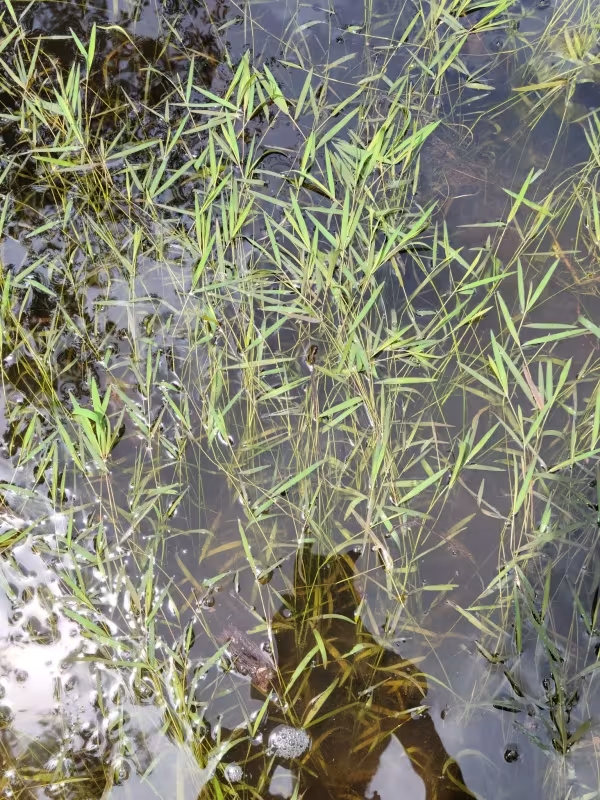
Description
Growing requirements
Luziola fluitans, commonly known as aquatic watergrass, is a perennial aquatic plant member of the Poaceae family. It is distinctively adapted to wetland environments, spending its life cycle submerged or floating in shallow water bodies.
The species originates from the Americas, where it is frequently found in ponds, marshes, and slow-moving streams. Its natural distribution is largely defined by the presence of stable water levels and nutrient-rich, muddy substrates.
Botanically, the plant features slender stems and linear leaves equipped with aerenchyma, which provides the buoyancy necessary to stay afloat. It possesses a creeping rhizomatous root system that anchors the plant firmly in the sediment.
Successful cultivation of Luziola fluitans requires a specific aquatic environment with consistent water levels. The plant thrives in stagnant or slow-flowing waters and is highly responsive to the nutrient availability within the organic-rich bottom mud.
In agricultural and ecological practice, this species is primarily valued for its role in shoreline stabilization and as a habitat builder. It is frequently employed in restoration projects to enhance the biodiversity of artificial or managed aquatic ecosystems.