
Ludwigia inclinata
Ludwigia inclinata
Description
Growing requirements
Ludwigia inclinata is a perennial plant belonging to the Onagraceae family. Originally native to the tropical wetlands of Central and South America, it has gained significant popularity as a highly aesthetic aquatic crop used in specialized water gardening and interior landscaping.
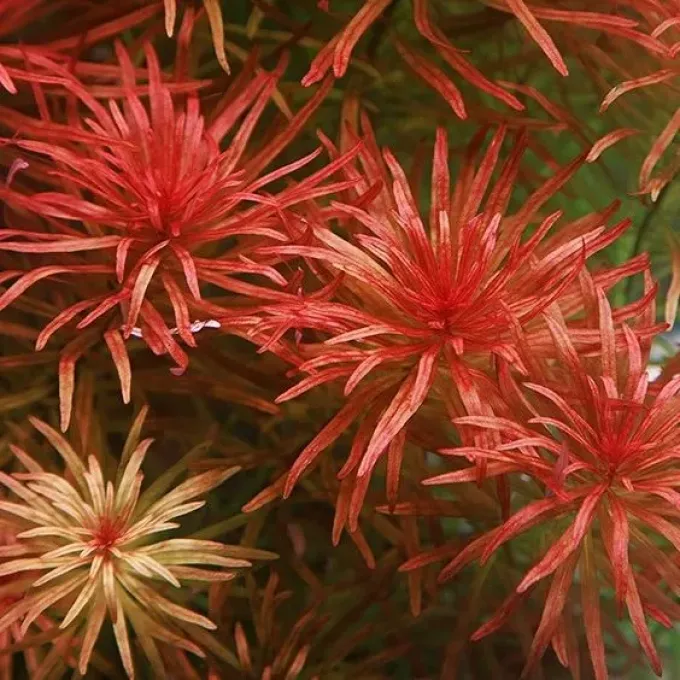
The plant exhibits high morphological plasticity, meaning its leaf shape and color intensity change significantly depending on light exposure, CO2 concentration, and nutrient availability in the substrate. Its stems are typically slender and can grow quite long if not pruned regularly.
Optimal growth requires high light intensity, ideally paired with supplemental CO2 injection. This promotes the development of vibrant red and orange pigments, which are highly prized by collectors. Without adequate lighting, the plant tends to lose its lower foliage and vitality.
The preferred soil should be nutrient-rich, specifically designed for aquatic environments to support robust root development. Maintaining a slightly acidic environment with a pH between 6.0 and 7.0 is crucial for the efficient uptake of microelements like iron and manganese.
Careful management of the water column is essential. Frequent water changes are necessary to prevent the buildup of metabolic byproducts that can inhibit the plant's growth. Regular pruning of the stems not only maintains the desired height but also encourages lateral branching.
Main diseases and pests
The most common biological threats include infestation by algae such as green spot algae or black beard algae, which compete for nutrients and light. These organisms can quickly overwhelm the plant if the biological balance of the cultivation system is compromised.
Nutrient deficiency syndromes, particularly iron deficiency, appear as a whitening or yellowing of the new leaves. While not an attack by a living pest, this physiological condition is a major cause of crop failure and requires immediate adjustments to the fertilization regime.