
Hyssop-leaved primrose-willow
Ludwigia hyssopifolia
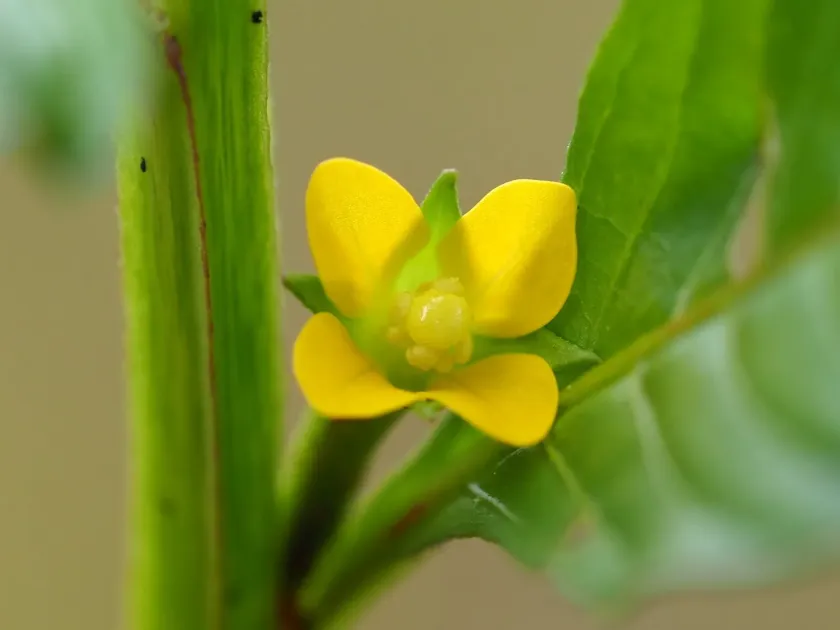
Description
Growing requirements
The Hyssop-leaved primrose-willow (Ludwigia hyssopifolia) is a prominent member of the Onagraceae family. It is widely recognized as a major weed in tropical agricultural systems, particularly in paddy fields.
This species thrives in high-temperature environments, flourishing best in tropical and subtropical regions. It requires constant access to moisture and is highly adapted to water-saturated soil conditions.
Regarding soil requirements, it prefers muddy, alluvial, or clay-based substrates that hold water effectively. It is capable of surviving in both semi-aquatic habitats and temporarily flooded terrestrial conditions.
Botanically, it features a reddish stem and lanceolate leaves. It exhibits high reproductive potential, producing a massive amount of seeds that allow it to colonize disturbed agricultural sites rapidly.
The management of this plant is vital in commercial rice cultivation, as it competes aggressively with the primary crop for light, nitrogen, and space, significantly impacting final yields.
Main diseases and pests
The primary threats posed by Ludwigia hyssopifolia include its ability to overwhelm crops and decrease production efficiency through competitive exclusion.
Control methods typically involve integrated pest management strategies, utilizing both chemical herbicide applications and mechanical weeding techniques.
While the plant is generally robust against typical agricultural pests, its rapid growth necessitates persistent monitoring to prevent it from establishing a permanent seed bank in the soil.
There are no significant diseases that naturally regulate its population, as it displays high resistance to common pathogens found in agricultural ecosystems.
The most effective strategy remains pre-emergent control and maintaining optimal water levels to prevent the seeds from germinating and gaining a foothold in the field.