
New Zealand myrtle
Lophomyrtus bullata (Sol. ex A. Cunn.) Burret
Description
Growing requirements
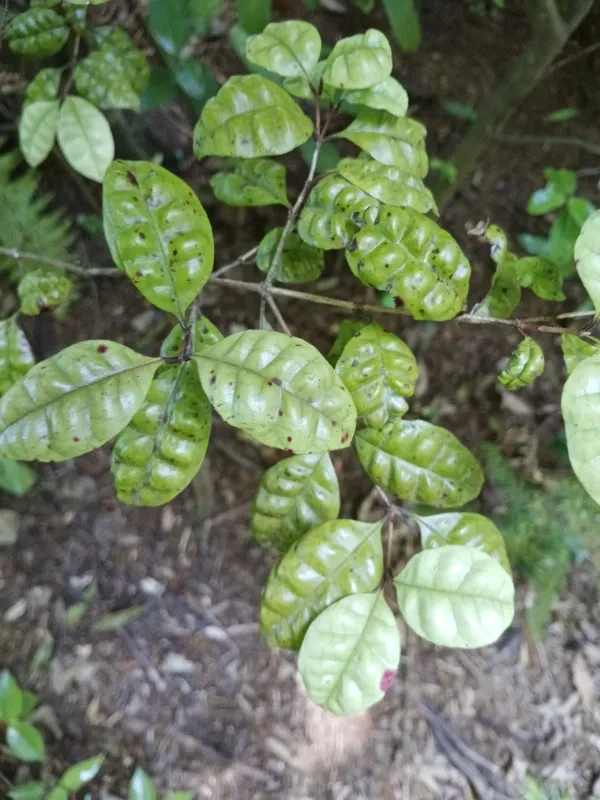
Lophomyrtus bullata, commonly known as New Zealand myrtle or ramarama, is an evergreen shrub belonging to the Myrtaceae family. It is native to New Zealand, where it typically inhabits forest margins and scrublands.
The plant is highly prized for its unique foliage. Its leaves are thick, leathery, and conspicuously bullate (puckered or blistered), often exhibiting deep bronze or purple pigments, which adds significant visual interest to any botanical collection.
Cultivation requires a well-drained, nutrient-rich soil medium with a slightly acidic to neutral pH. As a coastal native, the plant prefers humid air but dislikes waterlogged soil, which can rapidly lead to root rot in containerized plants.
The species is tender and not frost-hardy; in cooler climates, it must be grown in greenhouses or as a conservatory plant. Protection from harsh, freezing winds is essential to prevent leaf desiccation and branch dieback during winter months.
Routine pruning is recommended to maintain a dense, bushy habit. The plant responds well to shaping, making it a suitable candidate for topiary or structured garden displays in frost-free regions.
Main diseases and pests
The primary threats to Lophomyrtus bullata include fungal pathogens such as rust and leaf spot, which thrive in stagnant, humid environments where air circulation is restricted.
Insect pests, most notably scale insects and spider mites, are common in indoor settings. These pests cluster on the undersides of leaves and along stems, extracting sap and causing yellowing or leaf drop.
Managing these threats involves maintaining optimal ventilation and ensuring the plant is not overcrowded. Regular misting can help deter spider mites, while systemic insecticides are often needed for persistent scale infestations.
Sanitation is key; all fallen leaves and debris should be promptly removed from the growing area to prevent the accumulation of spores and pest eggs.
Monitoring for signs of stress, such as leaf discoloration or sticky honeydew residue, is critical for early intervention before the infestation impacts the plant's overall vigor.