
Lophocolea heterophylla
Lophocolea heterophylla
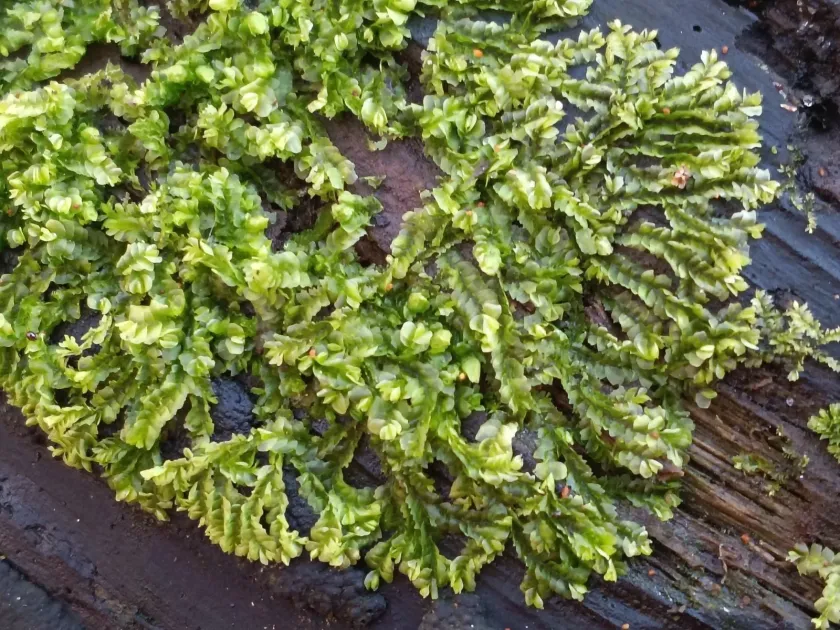
Description
Growing requirements
Lophocolea heterophylla is a species of liverwort belonging to the Lophocoleaceae family. It is a non-vascular plant typically found in forest ecosystems, serving as an important indicator of humidity and substrate quality rather than an agricultural crop.
The plant is widely distributed across the Northern Hemisphere. It primarily colonizes moist, shaded microhabitats such as decaying logs, damp soil, and rocks, where moisture levels remain consistently high throughout the growing season.
The climate requirements for this liverwort are strict: it demands high atmospheric humidity and protection from direct sunlight. It cannot tolerate drought or extreme heat, which restricts its growth to protected forest floors and sheltered ravines.
Botanically, it is recognized by its distinct leaf polymorphism, where the shape of the leaves varies significantly along the stem. This feature is an evolutionary adaptation that allows the plant to maximize light capture in light-limited forest environments.
In terms of ecological utility, Lophocolea heterophylla is studied for its role in soil moisture retention and organic matter decomposition. Its presence serves as a diagnostic tool for botanists and ecologists evaluating the health and stability of forest micro-environments.
Main diseases and pests
The primary threats to Lophocolea heterophylla include habitat destruction caused by intensive forestry practices and deforestation. The removal of the forest canopy increases sunlight penetration and dries out the substrate, leading to the rapid decline of the population.
Hydrological changes, such as drainage or altered groundwater levels, represent a critical danger to this species. As a moisture-dependent plant, it is extremely sensitive to shifts in the water regime of its immediate habitat.
Chemical pollutants and nitrogen deposition from nearby agricultural activities can negatively impact the delicate physiology of the liverwort. Because it lacks roots and absorbs nutrients directly from the air and rain, it is highly susceptible to toxins.
Mechanical damage to the substrate caused by heavy machinery during logging operations permanently destroys the micro-sites required for the liverwort's life cycle. Recovery of these populations is slow due to the specific requirements for successional stages of wood decay.
Increased competition from invasive vegetation and shifting micro-climates due to global warming represent long-term pressures. These factors alter the forest floor composition, making it increasingly difficult for specialized bryophytes to maintain their presence.