
Lophocolea bidentata
Lophocolea bidentata
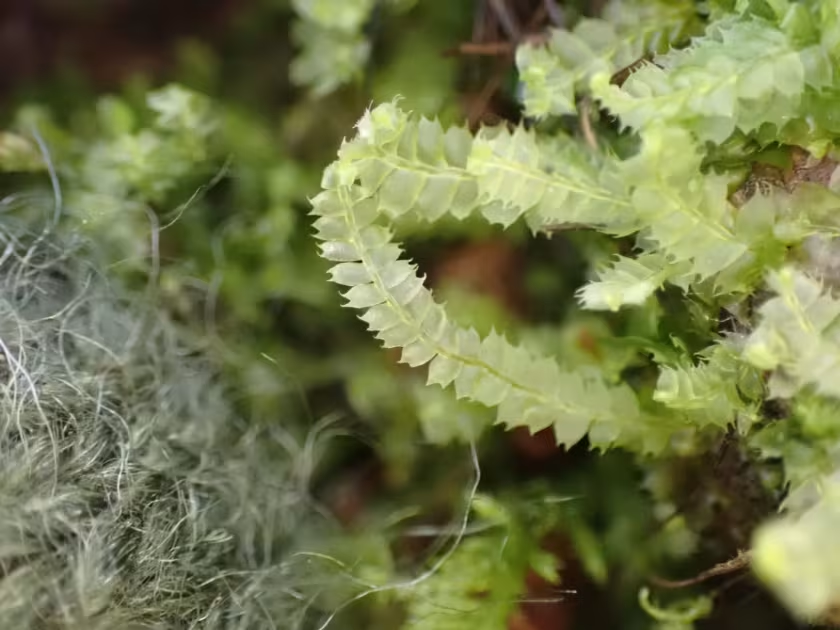
Description
Growing requirements
Lophocolea bidentata is a species of liverwort belonging to the family Lophocoleaceae. It is a non-agricultural plant that plays an essential ecological role in various forest ecosystems by maintaining moisture levels and soil stability.
The plant typically grows in shaded and humid environments, such as moist forest floors, decaying logs, and the bases of trees. Its growth habit allows it to form loose, light-green mats that can cover significant areas under stable environmental conditions.
The species requires high levels of atmospheric humidity and constant moisture. It is particularly sensitive to direct sunlight and desiccation, making it an excellent bioindicator for humid and shaded microclimates within forest habitats.
Botanically, it is characterized by its distinct two-lobed leaves arranged in two rows along the stem. This specific leaf shape maximizes water retention, allowing the organism to thrive in environments where water availability might be episodic.
In terms of ecological utility, Lophocolea bidentata contributes to the development of the moss layer, which creates micro-habitats for various insects, microorganisms, and fungi, effectively supporting the forest biodiversity.
Main diseases and pests
The primary threats to Lophocolea bidentata populations are habitat destruction through deforestation and industrial development, which permanently alter the microclimate necessary for its survival.
Drainage projects and changes in the hydrological landscape can lead to rapid desiccation of the soil, causing the moss to lose its growth vigor and eventually disappear from its natural range.
Air pollution, specifically high concentrations of sulfur dioxide and nitrogen compounds, poses a significant risk to the integrity of its leafy tissues, leading to chlorosis and stunted growth.
Agricultural runoff containing high levels of chemicals can disrupt the delicate balance of the moss's immediate environment, making it susceptible to physiological stress.
While the plant does not have significant pests, disturbances such as excessive soil compaction or trampling in forest areas can physically destroy the colonies and hinder vegetative reproduction.