
Tatsienlu honeysuckle
Lonicera tatsiensis
Description
Growing requirements
Tatsienlu honeysuckle (Lonicera tatsiensis) is a deciduous shrub belonging to the Caprifoliaceae family. It is native to the mountainous areas of China, thriving in environments ranging from high-altitude slopes to temperate forest margins.
This species is highly regarded for its hardiness and adaptability to cold climates. It grows best in well-drained, fertile loam soil that retains moisture but does not waterlog. While it prefers full sun for optimal flowering, it can tolerate partial shade, especially in warmer geographical regions.
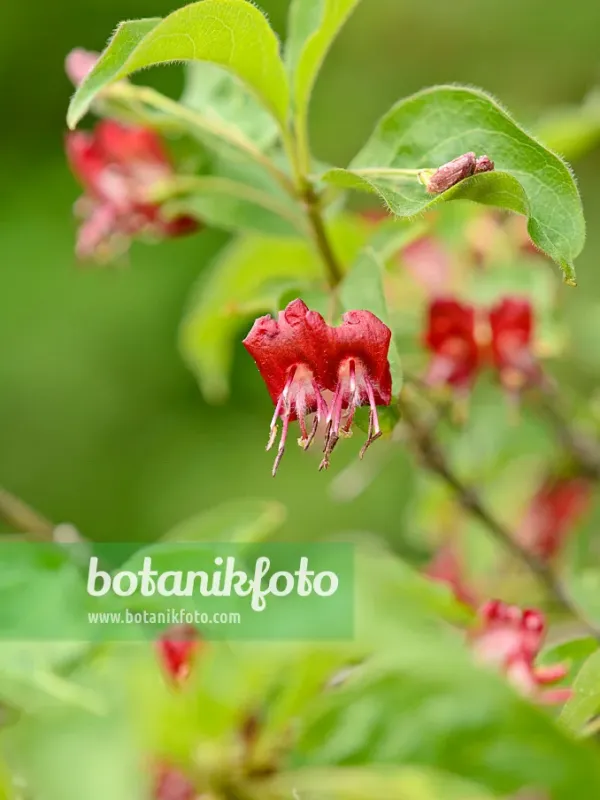
Botanically, Lonicera tatsiensis is defined by its dense habit and puberulous leaves. Its flowers exhibit the structural characteristics typical of the Isika section within the honeysuckle genus, often appearing in pairs and contributing significantly to the plant's ornamental appeal.
The primary utility of this culture lies in landscape horticulture. Because of its attractive foliage and structural shape, it is frequently utilized as a specimen plant or in shrub borders. It serves as an excellent addition to gardens aiming for a wild or naturalistic aesthetic.
Cultural practices for this plant are relatively straightforward. Essential care includes initial soil preparation with organic matter and regular irrigation during the first two growing seasons. Annual pruning, performed after the blooming period, helps maintain the plant’s health and prevents the center of the shrub from becoming too dense.
Main diseases and pests
Common diseases affecting Lonicera tatsiensis include powdery mildew, which often develops in stagnant air conditions or high humidity, and leaf spot diseases caused by various fungal pathogens during wet seasons.
Major pests that may attack this honeysuckle species include aphid infestations and scale insects, which target succulent new growth. Integrated pest management, including monitoring and the application of horticultural oils or targeted insecticides, is recommended to ensure the shrub’s continued vitality.