
Musk honeysuckle
Lonicera muscaviensis
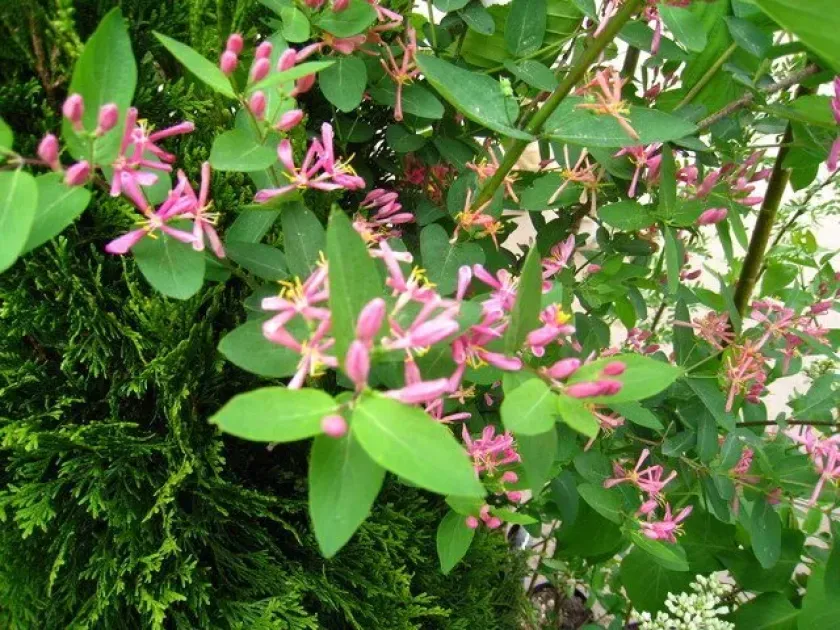
Description
Growing requirements
Musk honeysuckle (Lonicera muscaviensis) is a deciduous ornamental shrub belonging to the Caprifoliaceae family. This hybrid is a result of cross-breeding Lonicera morrowii and Lonicera tatarica, combining the best hardiness traits of both parent species.
Botanically, it features an upright to spreading growth habit with dense branching, making it an excellent candidate for structure in gardens. The leaves are generally lanceolate or ovate, providing a lush green appearance throughout the summer season.
The plant thrives in temperate climates and is highly resilient to frost. It prefers full sun exposure to maintain its shape and promote vigorous flowering, though it can tolerate partial shade in warmer regions.
Regarding soil requirements, it is adaptable to a wide range of soil types, provided they are well-draining. It grows best in fertile, loamy soils with a near-neutral pH balance and benefits from moderate moisture levels during active growth.
Its primary use is for landscaping, specifically in the creation of privacy screens, large hedges, and as a filler plant in shrub borders due to its fast growth rate and ability to withstand urban environmental stressors.
Main diseases and pests
Like many species in the genus Lonicera, the musk honeysuckle is susceptible to powdery mildew, especially in humid conditions or areas with stagnant airflow.
Insect pests, such as aphids and leaf-rollers, may infest the tender new growth during the spring, which can stress the plant and temporarily reduce its aesthetic appeal.
Management of these threats involves cultural practices, such as proper spacing during planting to ensure air circulation, which significantly decreases the incidence of fungal pathogens.
When chemical control is necessary, biological or soft insecticides are recommended to minimize impact on pollinators attracted to the shrub's flowers during the bloom period.
Consistent pruning practices are essential to remove deadwood and maintain plant vigor, thereby increasing the overall resistance of the shrub to common pests and diseases.