
Hairy honeysuckle
Lonicera hirsuta
Description
Growing requirements
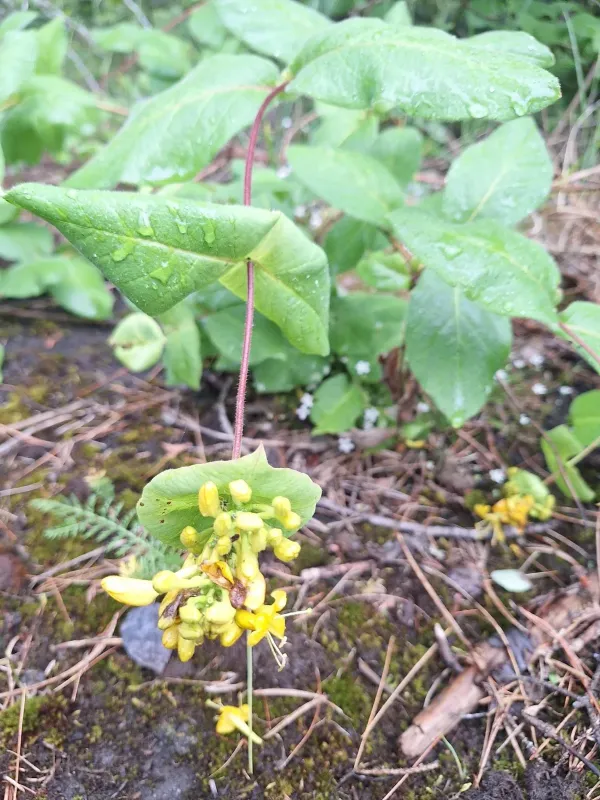
Hairy honeysuckle (Lonicera hirsuta) is a deciduous twining vine belonging to the Caprifoliaceae family. Native to North America, it is widely recognized for its pubescent leaves and stems, which give the plant a distinct, soft texture.
Botanically, it functions as an aggressive climber that utilizes available structures to reach sunlight. Its flowers typically exhibit yellow to orange hues, making it a valuable addition to naturalistic gardens and ecological restoration projects.
The cultural requirements for Lonicera hirsuta focus on well-draining, nutrient-rich soil. It thrives best in positions where its roots are kept cool and moist, while the foliage can be exposed to direct sunlight or light shade.
Climate adaptability is one of its strong suits, as the plant is hardy in temperate zones. However, providing a sturdy support structure is essential for its development, as it relies on its twining habit to spread vertically.
Maintenance tasks include early spring pruning to remove dead wood and encourage new growth. Adding organic mulch around the base helps retain moisture and suppresses weeds, ensuring the root system remains healthy throughout the growing season.
Main diseases and pests
The primary health concern for Hairy honeysuckle is powdery mildew, which thrives in humid conditions with poor air circulation. Regular thinning of the vines helps mitigate this risk significantly.
Aphids are the most common insect pests associated with this species. They frequently congregate on the soft new growth at the tips of the vines, causing curling and stunted development of leaves.
Monitoring the plant for signs of infestation is crucial during the active growing season. Early detection allows for the removal of pests through water sprays or the application of insecticidal soaps.
Root rot can occur if the planting site lacks proper drainage. To avoid this, gardeners should ensure that the plant is not situated in a low-lying area prone to water stagnation.
Systemic fungicides and pesticides should be used as a last resort, always adhering to the dosage recommendations to minimize negative impact on local pollinator populations.