
Hildebrand's honeysuckle
Lonicera hildebrandiana
Description
Growing requirements
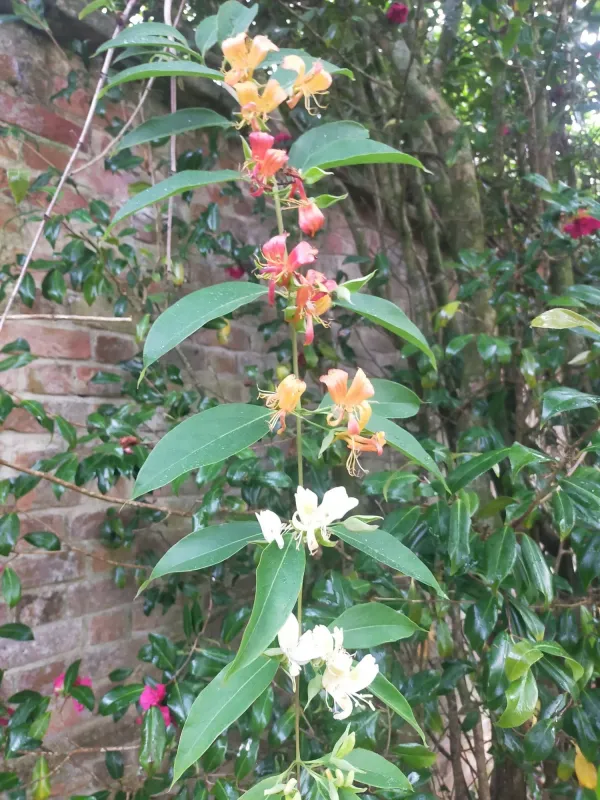
Hildebrand's honeysuckle (Lonicera hildebrandiana) is a magnificent evergreen woody climber belonging to the Caprifoliaceae family. It is distinguished by its impressively large flowers, which are the largest within the entire genus of Lonicera.
The species originates from the subtropical forests of Southeast Asia, including parts of Myanmar, Thailand, and China. As a strictly tropical to subtropical plant, it requires high temperatures throughout the year and is highly sensitive to frost damage.
Optimal growth is achieved in deep, fertile, and well-drained soils. The plant thrives in environments that provide consistent moisture and protection from harsh, drying winds, which could otherwise dehydrate its lush, evergreen foliage.
Cultivation requires significant structural support, such as sturdy pergolas or tall trellises, as the vine can grow quite vigorously. Regular feeding with organic fertilizers during the active growing season supports the development of its fragrant, trumpet-shaped flowers.
The primary use of this species is in ornamental horticulture. It is frequently planted in botanical gardens and conservatories where the climate can be strictly controlled, providing a stunning vertical display of its golden-orange blooms.
Main diseases and pests
Common pests include aphids and scale insects, which tend to infest the soft new growth. Disease susceptibility is generally limited to fungal issues like powdery mildew, which can occur if the plant is kept in areas with poor airflow and excessive leaf wetness.