
Glehn's honeysuckle
Lonicera glehnii
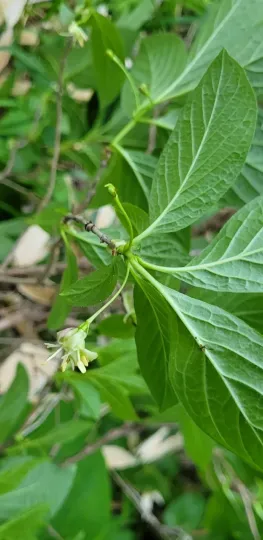
Description
Sowing dates
Glehn's honeysuckle (Lonicera glehnii) belongs to the Caprifoliaceae family. It is a perennial deciduous shrub that is primarily propagated through seeds or vegetative methods.
Sowing seeds in nursery conditions or open ground should ideally be done before winter, providing natural stratification. Spring sowing requires mandatory cold stratification of seeds for 2-3 months at temperatures between 0 and 5°C.
For vegetative propagation, hardwood or softwood cuttings are used. Softwood cutting is performed during the active growth period, typically in the first half of summer, utilizing rooting hormones to increase the success rate.
Planting pits should be prepared in advance, enriched with organic fertilizers and ensuring adequate drainage. The plant is sensitive to planting depth, so it is recommended to bury the root collar no more than 2-3 centimeters deep.
The planting pattern depends on the intended use: spacing of up to 1 meter is maintained for hedges, while up to 2.5-3 meters is used for individual specimen plantings.
Growing requirements
This species is endemic to Sakhalin Island and the Kuril Islands, which dictates its high requirements for air humidity and moderate temperatures. The plant prefers well-lit areas but can tolerate light shade during the peak of the day.
Glehn's honeysuckle requires fertile soil and prefers loams or sandy loams with a neutral or slightly acidic pH. A key condition for successful growth is a high level of soil aeration and the absence of standing groundwater.
The culture has excellent winter hardiness typical for northern plants; however, in its youth, it requires mulching the root zone with peat or humus to protect roots from deep freezing.
During the growing season, the plant needs regular watering, especially during fruit set and periods of drought. Lack of moisture leads to premature leaf drop and weakens the shrub's overall immune system.
Agrotechnics include annual sanitary and formative pruning. Removing old, damaged, or overcrowded branches improves light penetration within the canopy and reduces the risk of pathogen development.
Yield
Glehn's honeysuckle is primarily valued as an ornamental plant for landscape design and park greenery. Its ability to form a dense, uniform canopy makes the shrub highly desirable for landscaping projects.
The fruits of the plant are paired berries that, unlike edible honeysuckle species, are generally not consumed by humans due to specific bitter compounds or low gastronomic appeal.
The economic use of this species focuses on creating decorative arrangements, windbreak belts, and slope stabilization due to its strong root system. The plant also displays significant nectar production during the flowering period.
The biological productivity of the shrub directly depends on the level of maintenance. Regular fertilization with complex minerals in spring and organic matter in autumn promotes active biomass growth and abundant flowering.
The lifespan of a single shrub can reach 30-50 years with proper care, making it a durable element in garden compositions and forest shelterbelts.
Main diseases and pests
Glehn's honeysuckle is susceptible to fungal diseases such as powdery mildew, especially under high humidity and poor air circulation. Prevention consists of timely pruning and fungicide treatments when necessary.
Among pests, the honeysuckle aphid and leaf rollers pose the greatest threat, as they can significantly reduce the ornamental value. Systemic insecticides are applied during periods of high infestation.
Rodent damage to the bark may occur during winter, so installing protective mesh on the stems of young plants is recommended. It is also necessary to keep the area around the base of the shrub free of weeds.
Excessive soil moisture can cause root rot, making it crucial to manage the drainage system. Visual signs of damage include yellowing and wilting of the foliage.
Comprehensive plant protection includes periodic monitoring of leaf and bark condition. Implementing crop rotation in nurseries and removing plant debris in autumn minimizes the risk of infection spread.