
Low honeysuckle
Lonicera demissa
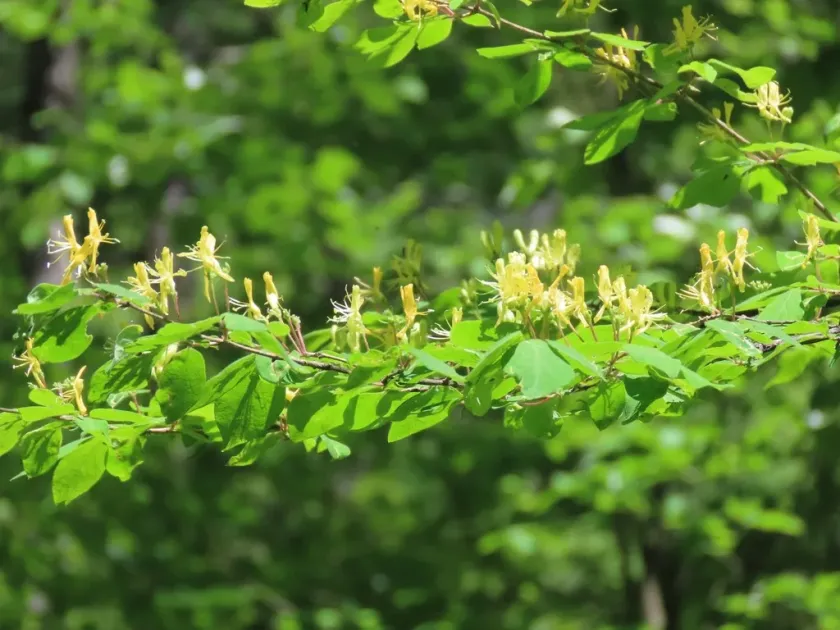
Description
Growing requirements
The low honeysuckle (Lonicera demissa) is a shrub belonging to the Caprifoliaceae family. It is recognized for its distinctive low-growing habit and dense branch structure, which makes it an excellent choice for landscaping applications.
Originating from Eastern Asia, specifically Japan, this species has adapted to various mountainous terrains. Its natural habitat includes slopes and forest edges, indicating a need for well-drained and airy soil conditions.
In cultivation, this plant requires deep, fertile, and slightly moist soil to reach its full potential. It is sensitive to waterlogging, so planting on slopes or in soil with added drainage materials is recommended.
The plant thrives in full sun or light shade, showing good adaptability to moderate climates. It is hardy to low temperatures, making it a reliable ornamental choice for temperate garden environments.
Cultural practices include occasional pruning to maintain the plant's shape and vigor. Applying organic fertilizer in early spring supports healthy vegetative growth and enhances the flowering potential of the shrub.
Main diseases and pests
Aphids are the primary insect pests affecting Lonicera demissa, often attacking tender shoots. Regular monitoring and the use of insecticidal soaps can manage these infestations effectively.
Powdery mildew is a common fungal threat, particularly in humid and stagnant air conditions. Improving air circulation around the plants is essential for prevention and control of this disease.
Leaf spot diseases may appear during wet seasons, leading to premature defoliation. Fungicides containing copper are effective when applied preventively during the start of the growth season.
Spider mites can be problematic in hot and dry climates. Ensuring that the plant receives proper hydration and keeping the surrounding environment clean helps mitigate these risks significantly.
To ensure long-term health, gardeners should perform yearly sanitary pruning, removing dead or infected wood. This practice reduces the accumulation of pathogens and promotes vigorous new growth annually.