
Orange honeysuckle
Lonicera ciliosa
Description
Growing requirements
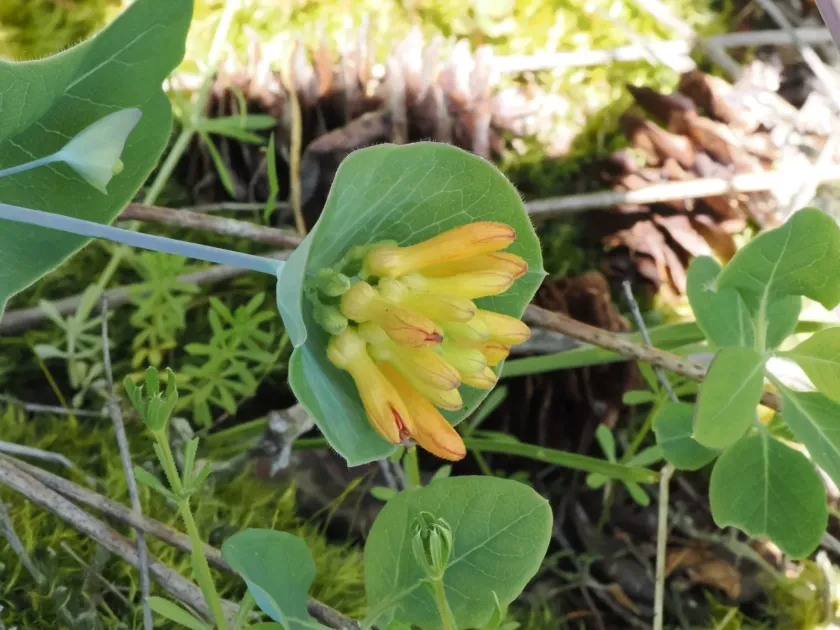
Orange honeysuckle (Lonicera ciliosa) is a deciduous woody vine belonging to the Caprifoliaceae family. Native to western North America, this species thrives in varied forest environments, ranging from coastal areas to mountain slopes.
The plant requires well-drained, nutrient-rich soil with a neutral to slightly acidic pH. It performs best in locations where it receives full sun to promote blooming, while ensuring its roots are kept cool and shaded under a layer of mulch or low-growing groundcover.
Climate adaptation is a key factor, as the vine prefers regions with moderate moisture and protection from harsh, drying winds. During the establishment phase, consistent watering is essential to support the development of a healthy root system.
Agronomic management involves providing sturdy vertical support structures such as trellises or fences. Regular maintenance includes selective pruning after the flowering period to manage the vine's vigor and encourage a more compact growth habit.
The primary use of Lonicera ciliosa is in ornamental landscaping. It is highly valued for its striking orange-red trumpet-shaped flowers that serve as a natural magnet for hummingbirds and other pollinators, adding ecological value to the garden.
Main diseases and pests
Powdery mildew is the most common fungal disease, typically occurring in stagnant or humid conditions. To prevent outbreaks, it is crucial to ensure adequate airflow through the foliage and avoid overhead watering that keeps the leaves damp for prolonged periods.
Aphid infestations can occur on young, succulent shoot tips during the early growing season. Gardeners should monitor the plants regularly and implement integrated pest management practices, such as encouraging beneficial insects or using mild insecticidal soaps.