
Lisianthius nigrescens
Lisianthius nigrescens
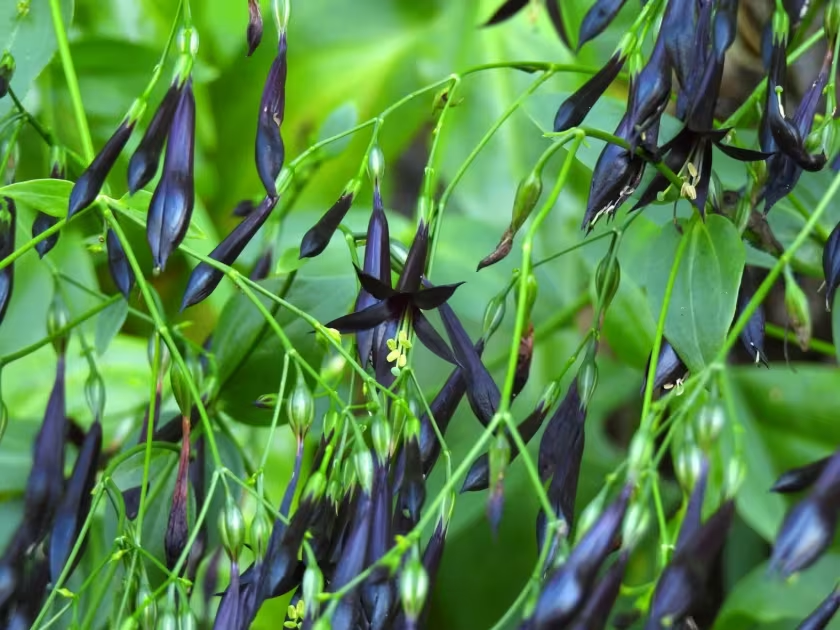
Description
Sowing dates
Sowing seeds of this culture requires special attention due to their extremely small size. The optimal time for sowing in greenhouse conditions is considered late winter or early spring to ensure a sufficient photoperiod.
Seeds are sown on the surface without covering them with soil, as they require access to sunlight for germination. The substrate must be sterile, lightweight, and possess high moisture-retention capacity.
Maintaining soil temperature at 20–23 degrees Celsius is critical for uniform emergence of seedlings. Containers are covered with transparent film or glass to preserve a constant level of air humidity.
After the appearance of cotyledon leaves, it is important to gradually acclimatize the plants to lower humidity by regularly ventilating the crops. Pricking out is performed at the stage of two to three true leaves into individual cassettes or pots.
The germination process can take from two to three weeks, so it is important to prevent the top layer of soil from drying out throughout the entire waiting period for emergence.
Growing requirements
Lisianthius nigrescens, a member of the Gentianaceae family, prefers sunny areas protected from strong winds. In cultivation, the plant requires fertile, well-drained soils with a neutral or slightly acidic pH value.
The crop is extremely sensitive to excessive water stagnation at the root system, which can lead to rapid rotting. Watering should be moderate and directed at the base to avoid wetting the aerial parts.
During the active vegetation period, the plant requires regular fertilization with complex mineral fertilizers dominated by potassium and phosphorus. This promotes the formation of strong stems and intense coloration.
The temperature regime should be stable, ideally between 18–25 degrees during the day. With sharp temperature fluctuations, plant development slows down significantly, and the quality of inflorescences may decrease.
The plant has specific flowering biology, reacting to the length of the daylight hours, so supplemental lighting is often used in winter-spring periods for commercial production.
Main diseases and pests
The main danger to the crops comes from fungal diseases that develop in conditions of high humidity and poor ventilation. Fusarium wilt and gray mold are the most frequent causes of young plant death.
To combat fungal pathogens, it is recommended to carry out preventive treatment with systemic fungicides and strictly follow the irrigation regime. It is important to maintain cleanliness in greenhouses by removing plant residues.
Among pests, thrips and spider mites cause the most damage, as they feed on cell sap and transmit dangerous viral diseases. Regular inspection of the underside of leaves allows for detecting insect colonies at early stages.
Aphids can also attack young shoots, causing their deformation and reducing the marketable quality of the crop. Against these pests, appropriate insecticides or biological control methods, such as releasing entomophages, are used.
Compliance with crop rotation and the use of only high-quality disinfected substrate significantly reduces the risk of infestation by specific soil pests.
Harvesting
Harvesting of inflorescences is conducted in the morning hours when they are still in a semi-open state for better transportation. It is important to use disinfected tools to prevent infection from entering the cuts.
Immediately after cutting, the stems must be placed in clean water with the addition of preservatives for cut flowers. This extends longevity and maintains the turgor of leaves at a high level.
For commercial distribution, the produce is sorted by stem length and the degree of bud opening. Storage is carried out in a cool room at a temperature of about 5 degrees Celsius.
If long-distance transportation is necessary, special vertical cardboard boxes are used to prevent mechanical damage to the plant's fragile petals.
Repeated harvesting from a single plant is possible with proper care of the remaining stem, allowing for an extended period of marketable production within a single season.