
Lindernia procumbens
Lindernia procumbens (Krock.) Philcox
Description
Growing requirements
Lindernia procumbens, commonly known as the yellow-cup or false pimpernel, is an annual herbaceous plant belonging to the family Linderniaceae. It is widely recognized as a significant weed in wetland environments and specialized agricultural systems, particularly rice paddies.
Originating from temperate and subtropical regions across Eurasia, this plant has spread to various humid environments globally. It thrives in soils that remain constantly moist or submerged, making irrigation infrastructure a primary pathway for its colonization.
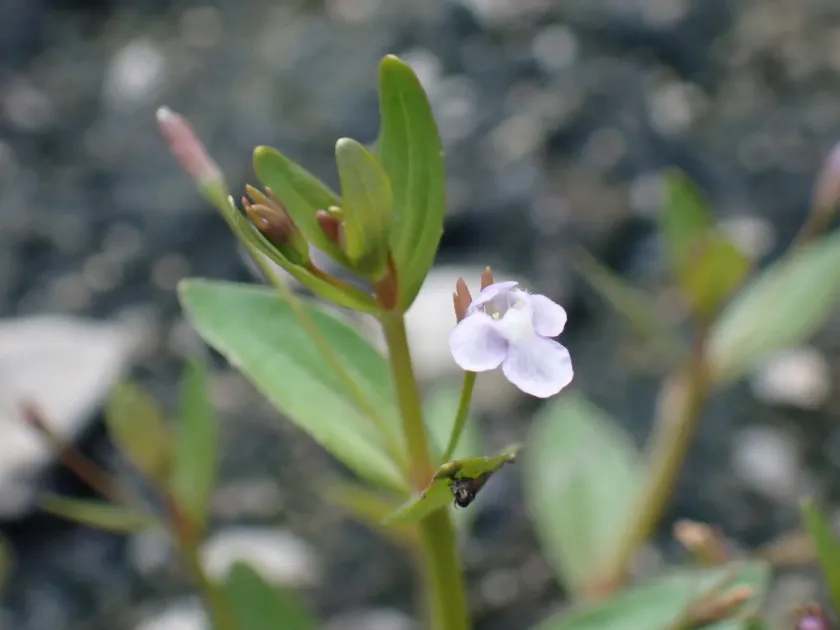
The plant exhibits a prostrate or ascending growth habit, usually branching from the base. Its stems are slender, typically growing to a height of 5–15 cm, which allows it to thrive in the micro-environment of low-canopy agricultural settings.
Its leaves are opposite, entire, and sessile, providing a high surface area for moisture absorption. This morphological adaptation is essential for its survival in flooded conditions where other terrestrial weeds might struggle to develop roots.
The flowers are small, solitary, and borne on pedicels in the leaf axils. The corolla is typically pale violet or pinkish, a characteristic trait that assists in identifying this species during field scouting and early-stage weed surveys.
Main diseases and pests
The primary agricultural challenge posed by Lindernia procumbens is its ability to outcompete crops for light and nutrients during the early establishment phase. In rice cultivation, it can significantly decrease yield by reducing the space available for tiller development.
Resistance to common herbicides is an increasing issue. Agronomists often face difficulties in controlling established populations due to the weed's ability to survive in both submerged and semi-saturated soil conditions, limiting the window for effective treatment.
The presence of dense mats of this weed alters the local microclimate within the crop canopy. This increases relative humidity, which promotes the development of various foliar fungal diseases, affecting the overall health and quality of the primary crop.
Effective management requires a combination of cultural practices, including land leveling to ensure uniform water depth and the use of competitive crop varieties. Integrated pest management (IPM) strategies are essential to keep populations below economic thresholds.
- Frequent soil moisture management to disrupt life cycles.
- Application of selective pre-emergence herbicides.
- Manual removal in small-scale agricultural patches.
- Preventing seed dissemination through irrigation channels.
- Regular field scouting during the vegetative growth stage.