
Licania rigida
Licania rigida Benth.
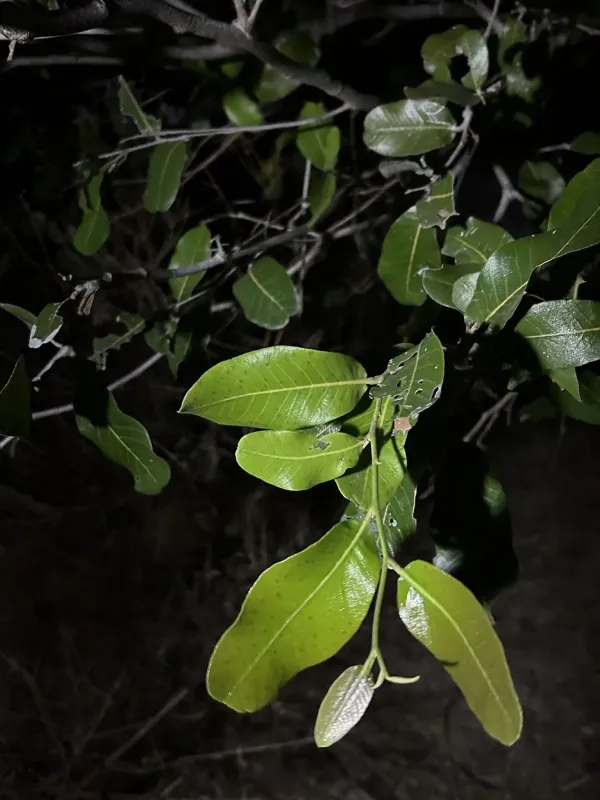
Description
Sowing dates
Licania rigida is primarily managed as an extractive crop or in semi-cultivated plantations, meaning traditional intensive sowing methods are not standard.
Propagation is generally performed using seeds, which must be harvested from the healthiest and most productive mother trees in the region.
Due to the hard nature of the seed coat, growers often perform scarification to ensure uniform germination after the seeds are planted.
The optimal planting time coincides with the arrival of the rainy season to provide the necessary moisture for the development of the root system.
Seedlings raised in nurseries for about a year have a higher survival rate compared to direct seeding, which is often affected by harsh environmental conditions.
Growing requirements
This species belongs to the Chrysobalanaceae family and is native to the semi-arid "caatinga" biome of Northeastern Brazil.
It is highly recognized for its extreme drought tolerance, allowing it to thrive in regions where annual precipitation is very limited.
The tree adapts well to poor, sandy, and rocky soils where other traditional oil-bearing crops often fail to establish or produce yield.
Exposure to direct sunlight is crucial for the tree's health and fruit production; therefore, plantation design should prioritize spacing and layout.
The species is exceptionally well-suited to hot, semi-arid tropical climates, making it a valuable asset for local agro-industrial development.
Yield
The economic focus is on the seeds, which are the source of high-quality oiticica oil, a vital industrial product for the paint and varnish sectors.
The yield per tree varies significantly based on environmental conditions, maturity of the tree, and the amount of rainfall during the fruit-set period.
Oiticica oil is prized for its high content of fatty acids, which provide excellent drying properties and durability to industrial coatings.
Processing involves extracting the oil from the kernels, with modern methods yielding a significant volume of high-quality oil for the market.
Sustainable harvesting and management practices are essential to maintaining consistent yield levels across different agricultural seasons.
Main diseases and pests
The primary threats to Licania rigida come from insect pests that attack the fruit and seeds during their developmental stages on the tree.
Excessive humidity during the ripening phase can lead to fungal infections, which degrade the seed quality and impact the oil extraction process.
Wild animals, particularly rodents, pose a challenge by consuming fallen seeds, necessitating protective measures for the plantation areas.
Preventive maintenance involves regular cleaning of the orchard floor and thinning the canopy to allow for better air circulation and sunlight penetration.
Given its natural hardiness, the species is relatively resistant to many common agricultural diseases that affect more fragile tropical crops.
Harvesting
Harvesting is typically conducted by hand, focusing on collecting fallen fruit from the ground once they reach full maturity.
Prompt collection is vital to avoid damage from soil moisture and to ensure that the oil content in the kernels remains pristine.
Once gathered, the fruits undergo a process of peeling, drying, and shelling to isolate the oil-rich kernels for further industrial processing.
Storage of the kernels requires dry, ventilated conditions to prevent the onset of oxidation and the development of harmful molds.
Future development in mechanical harvesting equipment could further streamline the collection process, reducing labor costs and improving efficiency.