
Panicled libertia
Libertia paniculata Spreng.
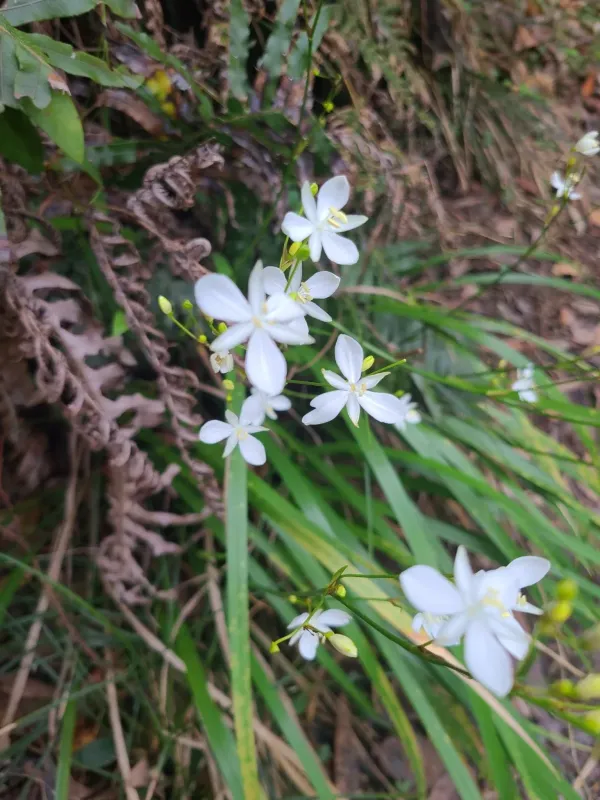
Description
Growing requirements
Panicled libertia (Libertia paniculata) is a rhizomatous perennial plant belonging to the Iridaceae family. Native to the eastern regions of Australia, this species is highly valued for its elegant, grass-like foliage and sophisticated flowering habit.
Botanically, it is characterized by dense tufts of narrow, evergreen leaves and tall, slender stems bearing delicate white flowers. The inflorescence takes the form of a panicle, which provides a graceful, airy effect in late spring and early summer.
The culture thrives in well-drained, fertile soil with an acidic to neutral pH. It prefers a location with partial to full sun exposure, although it requires protection from intense midday heat in warmer climates to maintain leaf color and vigor.
Watering requirements include keeping the soil consistently moist but never waterlogged. Since the species is sensitive to root saturation, incorporating organic matter and providing a sufficient drainage layer are critical steps during the planting phase.
In landscaping, Libertia paniculata serves as an excellent structural element. It is commonly utilized in mixed perennial borders, rock gardens, and container arrangements, adding year-round texture due to its resilient, blade-like foliage.
Main diseases and pests
The most significant threats to the health of panicled libertia are associated with poor cultural practices, particularly overwatering. Root rot is the primary concern, often appearing when the plant is grown in dense, poorly drained, or heavy clay soils.
Pests such as slugs and snails are particularly problematic during wet, cool seasons. They feed on the tender foliage, leaving irregular holes and weakening the plant's overall aesthetic appeal, which necessitates regular manual monitoring or bait usage.
Fungal leaf spot diseases may develop if the plant is grown in areas with low light and high humidity. Ensuring proper spacing between plants improves airflow, which is a highly effective preventative measure against various fungal pathogens.
Management of these issues relies heavily on maintaining a clean environment around the base of the plant. Removing dead foliage in early spring prevents the buildup of pathogens and allows new growth to emerge without competition or infection risk.
If disease symptoms manifest, treatment should involve removing the affected leaves and applying appropriate fungicides if the infection is widespread. Maintaining balanced nutrition and adequate light exposure remains the best strategy for long-term plant resilience.