
Dense blazing star
Liatris spicata (L.) Willd.
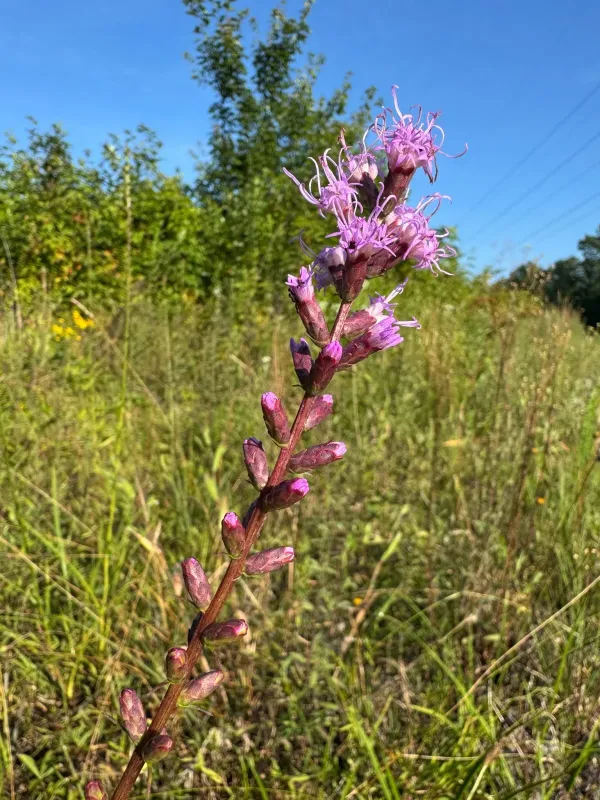
Description
Sowing dates
The planting of Liatris spicata is typically performed via seed or tuber division. Sowing seeds directly into the soil should be done in late autumn, allowing for natural winter stratification to break seed dormancy.
For greenhouse production, seeds are sown in early spring in well-drained trays. A light, peat-based substrate is recommended to facilitate proper root development and prevent damping-off disease.
Tuberous rhizomes are the preferred method for commercial cultivation. They should be planted at a depth of 5 to 10 cm, ensuring the crown buds are oriented upward to accelerate shoot emergence.
Planting density is crucial for crop quality. A spacing of 20–30 cm between plants is standard to allow sufficient light penetration and airflow, which significantly reduces the risk of fungal infections.
Consistency in depth is vital during mechanized or manual planting to ensure uniform emergence. Proper contact with moist soil must be maintained immediately after planting to ensure successful establishment.
Growing requirements
Liatris spicata, a member of the Asteraceae family, thrives in full sun conditions. While it can tolerate partial shade, insufficient sunlight often leads to leggy growth and reduced bloom density.
The plant requires well-drained soil with a slightly acidic to neutral pH. It is highly intolerant of waterlogged conditions, which lead to the rapid rot of its sensitive corm-like root systems.
Climatic requirements involve a moderate temperate climate. The plant is hardy and adapted to survive cold winters, provided that the soil is not prone to deep freezing in a saturated state.
Irrigation management is key to successful yields. While established plants show some drought resistance, consistent moisture is necessary during the pre-blooming phase to ensure optimal spike length.
Fertilization should be balanced. Excessive nitrogen application should be avoided, as it encourages excessive vegetative growth at the expense of flower development. Potash-rich fertilizers are beneficial for spike rigidity.
Main diseases and pests
Root rot is the most significant agronomic threat to Liatris spicata. This condition is almost exclusively linked to poor drainage or overly frequent irrigation during dormant periods.
Pests such as slugs and snails can cause substantial damage to young shoots in early spring. Barrier methods or approved molluscicides are typically employed in intensive production systems.
Insects like aphids and certain larvae may occasionally infest the spikes. Integrated pest management strategies, including the use of neem oil or targeted insecticides, are effective in early stages.
Fungal leaf spot diseases can occur during humid summers. Improving the physical space between plants to allow for better air circulation is the best preventive measure against these pathogens.
Monitoring for signs of wilting is essential. If wilting occurs despite adequate soil moisture, it is a clear indicator of rot within the tuber system, necessitating immediate removal of the plant.
Harvesting
Harvesting for the cut-flower market is done when approximately one-third of the florets on the spike have opened. This stage ensures the longest vase life for the product.
For dried flower production, spikes are harvested early in the blooming process and hung upside down in a dark, well-ventilated room to preserve the vibrant purple hue.
If seeds are the primary goal, harvest the spikes once they turn light brown and begin to dry on the stem. Careful handling is required to avoid premature seed dispersal in the field.
Post-harvest management involves cutting the foliage to ground level after the first hard frost. This allows the plant to relocate nutrients into the rhizomes for the following season.
For commercial tuber propagation, rhizomes are lifted from the soil after the foliage has died back. They are cleaned, graded by size, and stored in a cool environment with sand to maintain viability.