
White-flowered groundcherry
Leucophysalis grandiflora
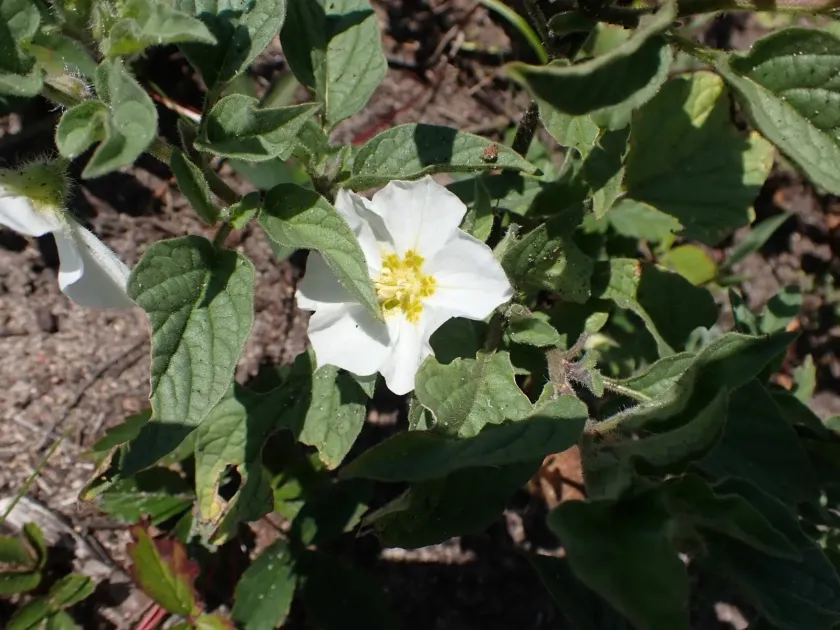
Description
Sowing dates
Leucophysalis grandiflora is a distinct member of the Solanaceae family. Seeds are typically sown indoors in late winter or early spring to ensure a long enough growing season.
The seeds require a warm, sterile seed-starting mix and should be covered lightly to facilitate germination, which usually occurs within two weeks.
Proper spacing is crucial to prevent competition for light and nutrients, so seedlings should be transplanted into individual pots before moving outdoors.
Hardening off the plants is a critical step that involves gradually exposing them to outside temperatures over the course of seven to ten days.
Direct sowing into the soil is only recommended in regions with very long, frost-free seasons to ensure the plant reaches maturity before winter.
Growing requirements
The plant thrives in well-drained, sandy loam soils with a neutral or slightly acidic pH level for optimal nutrient availability.
Positioning the plant in full sunlight is essential for blooming and fruit development, although partial afternoon shade may be beneficial in extremely hot climates.
Watering should be consistent but moderate; the soil should be kept moist but never waterlogged to avoid root rot and other fungal diseases.
Fertilization with a balanced NPK fertilizer can be applied during the early growth stages to support vigorous development of the stems and leaves.
Organic mulching around the base of the plant helps maintain soil temperature and suppresses weeds that might compete for vital resources.
Main diseases and pests
Like many members of the nightshade family, Leucophysalis grandiflora is susceptible to late blight, which can quickly devastate a crop under high humidity.
The Colorado potato beetle is a primary pest threat, often feeding voraciously on the foliage and requiring immediate management interventions.
Aphids and spider mites are common pests that tend to cluster on the underside of leaves, causing structural damage and stunted growth over time.
Integrated pest management, including physical removal of insects and the use of insecticidal soaps, is highly recommended for control.
Crop rotation is fundamental to reducing the soil-borne pathogen load and ensuring long-term health for the planting area.