
Leucas aspera
Leucas aspera (Willd.) Link
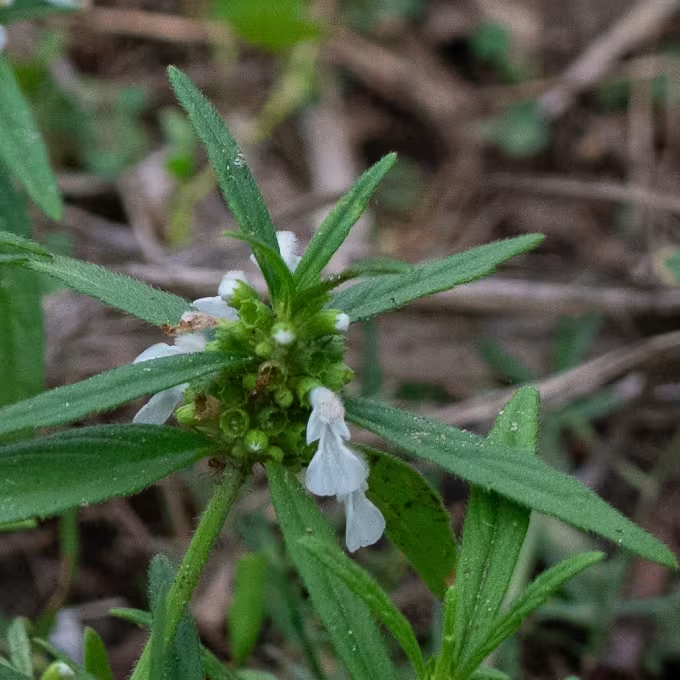
Description
Sowing dates
Leucas aspera is an annual herbaceous plant that thrives in warm, tropical climates. Sowing should commence in spring once soil temperatures reach a stable 18–22°C, ensuring there is no threat of frost which can severely stunt early growth.
Seeds are sown at a shallow depth of approximately 0.5 to 1 cm. For professional agricultural production, row planting with a spacing of 30–45 cm is recommended to allow each plant sufficient room to branch out and develop its vegetative mass.
The plant demonstrates rapid germination if the soil is kept consistently moist during the first two weeks. Ensuring even seed distribution is crucial for uniform crop development and to prevent overcrowding in the seedling stage.
Before sowing, it is essential to prepare the seedbed by incorporating compost or organic matter. The soil must be thoroughly tilled to create a fine texture that promotes root penetration and ensures efficient water drainage.
In regions with a long growing season, successional planting can be utilized to obtain multiple harvests throughout the year, provided temperatures remain within the optimal range for the species.
Growing requirements
Belonging to the Lamiaceae family, Leucas aspera requires significant exposure to direct sunlight to produce high-quality therapeutic compounds. Shaded locations result in spindly growth and reduced oil content.
The crop prefers well-drained sandy or loamy soils with a neutral pH. It is highly intolerant of waterlogged conditions, making proper site selection and drainage management the primary considerations for successful farming.
Temperature plays a vital role in development, with an optimal range between 25°C and 30°C. While the plant shows some drought tolerance, supplemental irrigation during the vegetative stage is necessary to maximize biomass yield.
Soil aeration is critical; therefore, periodic cultivation and hoeing between rows are required. This process not only manages weeds but also improves soil structure and gas exchange for the root system.
The plant is sensitive to low temperatures and will stop developing if conditions drop below 10°C, which restricts its viable cultivation to warmer geographical zones or greenhouse environments.
Main diseases and pests
Root rot is the most significant threat to Leucas aspera, primarily triggered by excessive moisture and poor soil aeration. To mitigate this risk, farmers must ensure that water drains away from the root zone effectively.
Pest pressure from aphids and spider mites can be high, particularly in arid climates. These pests target the tender tips of the plant, potentially causing severe damage to the foliage and reducing marketability.
Biological pest control methods, such as the use of neem oil or predatory insects, are preferred over synthetic pesticides to preserve the medicinal integrity of the herb. Regular monitoring is necessary to detect infestations early.
Weed management is vital during the first month after germination. Because the plant is relatively slow to establish in its initial weeks, competition with invasive grasses can lead to significant yield losses.
Crop rotation is recommended to prevent the buildup of soil-borne pathogens. Rotating Leucas with non-Lamiaceae crops every two years helps maintain soil health and minimizes the need for chemical intervention.
Harvesting
The harvesting stage is critical and should coincide with the onset of full flowering. At this phenological phase, the concentration of essential oils and other phytochemicals in the leaves and stems is at its peak.
The harvest involves cutting the aerial parts of the plant at approximately 10–15 cm above the soil surface. Sharp cutting tools should be used to prevent damaging the lower stems, which facilitates recovery.
After harvesting, the plant material must be dried in a shaded, well-ventilated area. Direct sunlight should be strictly avoided to prevent the degradation of heat-sensitive compounds and the loss of natural color.
Drying is considered complete when the stems become brittle and snap easily. The dried herb is then cleaned of debris and stored in moisture-proof containers to maintain quality and potency over time.
Properly cured and stored Leucas aspera can maintain its medicinal effectiveness for over a year, provided it is kept in a cool, dark environment away from humidity and fluctuations in temperature.