
Alpine Leucanthemopsis
Leucanthemopsis alpina
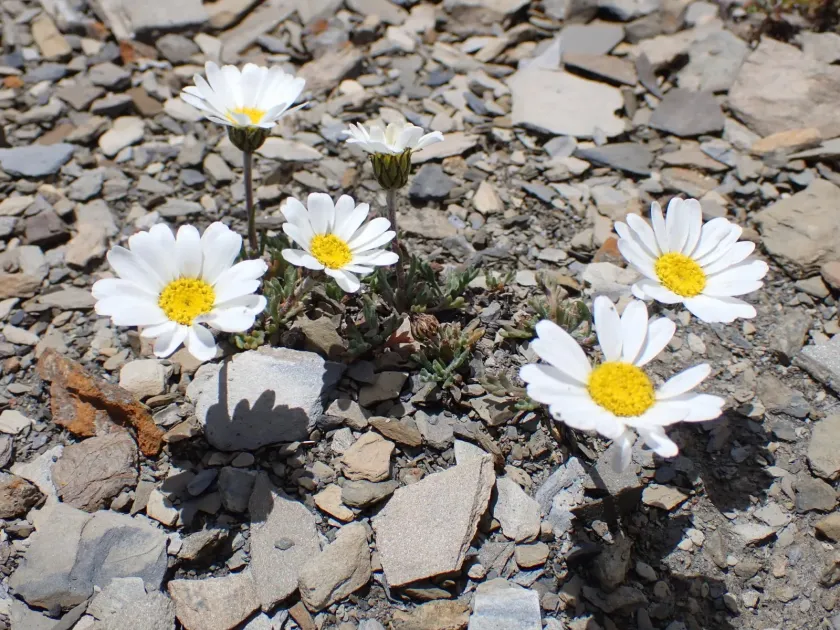
Description
Sowing dates
Alpine Leucanthemopsis is primarily propagated via seeds. Sowing is most successful when performed in late autumn, allowing the seeds to undergo natural cold stratification throughout the winter.
If sowing in the spring, it is essential to keep the seeds in a cold environment for at least a month before planting to ensure optimal germination rates.
Seeds should be sown on the surface of a light, well-draining soil mix, as they are small and require sunlight to trigger growth.
Once the seedlings develop their first true leaves, they should be transplanted to their final location, ensuring they have enough space to establish their root systems.
Vegetative propagation by dividing established clumps can be performed in early spring or immediately after the flowering period to minimize plant stress.
Growing requirements
Alpine Leucanthemopsis, a member of the Asteraceae family, is a small, hardy perennial native to the mountainous regions and high-altitude grasslands of Europe.
The plant thrives in full sunlight and requires poor, gritty, or sandy soil. It is well-adapted to environments where most other garden species would struggle to survive.
Good drainage is the most critical factor for successful cultivation; stagnant moisture around the roots will inevitably lead to plant decay.
Alpine Leucanthemopsis is perfectly suited for rock gardens, stone troughs, and areas with harsh climates where high wind and cold temperatures are common.
The species does not require rich fertilizers; in fact, overly fertile soil encourages leggy, weak growth that ruins the natural compact, mat-forming habit of the plant.
Main diseases and pests
The primary threats to this species are fungal diseases, particularly crown rot, triggered by poor air circulation and excessive moisture in the soil.
Preventative measures include using a mineral-based substrate and applying a layer of fine grit around the collar of the plant to keep foliage dry.
While generally pest-resistant, aphids can occasionally infest new flower buds during dry and hot weather, requiring manual removal or mild intervention.
Slugs can be problematic, especially in damp, shaded settings, so ensuring the plant is in a dry, open location is the best natural defense.
Regular maintenance, including the removal of dead leaves from the base of the plant, is crucial to prevent the build-up of pathogens within the clump.