
Leptopteris superba
Leptopteris superba
Description
Growing requirements
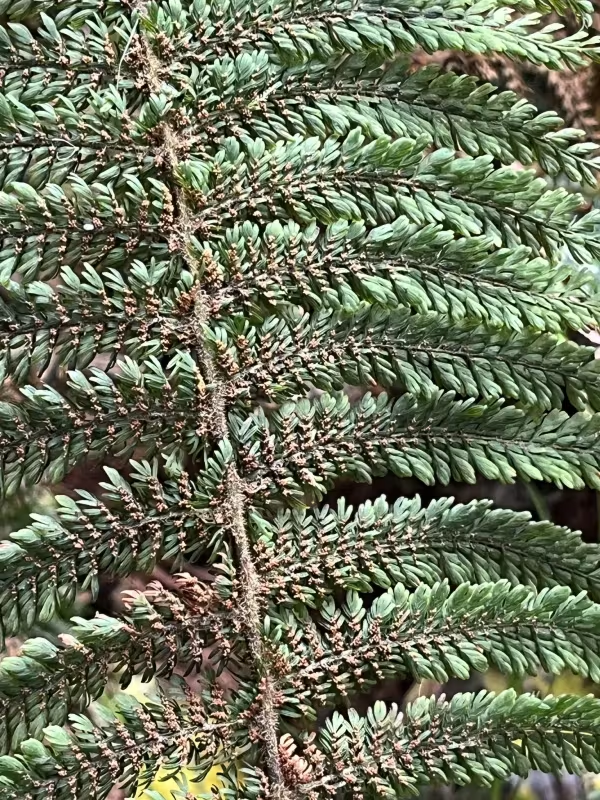
Leptopteris superba, a member of the Osmundaceae family, is a rare and visually striking fern native to the temperate rainforests of New Zealand. It is highly valued for its dense, finely divided, and translucent fronds.
The species requires extremely high atmospheric humidity, often needing a closed environment like a greenhouse or terrarium to thrive. It is not suitable for standard household conditions due to its specialized environmental needs.
The ideal growing medium should be loose, organic-rich, and slightly acidic. It is essential to maintain a moist, well-draining soil structure that mimics the humus-rich forest floor where it naturally grows.
This fern thrives in cool temperatures and cannot tolerate high heat or direct sunlight. Consistent shading and a steady supply of cool, humidified air are necessary to prevent the fronds from scorching or drying out.
In terms of cultivation, this species is primarily an ornamental specimen for advanced hobbyists and botanical institutions. Its slow growth rate and sensitivity make it a challenging plant to propagate and maintain long-term.
Main diseases and pests
Fungal infections represent the most significant threat, often resulting from poor ventilation and excessive moisture accumulation on the foliage. Keeping the air circulating is crucial for disease prevention.
Pests like mealybugs can colonize the plant in humid environments. Because of the delicate nature of the fronds, removing pests mechanically is preferred over harsh chemical treatments, which may cause leaf burn.
Dehydration is a critical issue; even a short period of drying out can cause the delicate fronds to collapse and die back permanently. Consistency in watering is the foundation of successful cultivation.
High mineral content in the water can lead to root damage and leaf tip burn. It is strictly recommended to use distilled, reverse osmosis, or pure rainwater to maintain optimal soil chemistry.
Excessive UV radiation is lethal to this shade-loving plant. Exposure to direct light will lead to immediate damage to the photosynthetic tissue, causing the fern to lose its aesthetic appeal and structural integrity.