
Leavenworthia alabamica
Leavenworthia alabamica
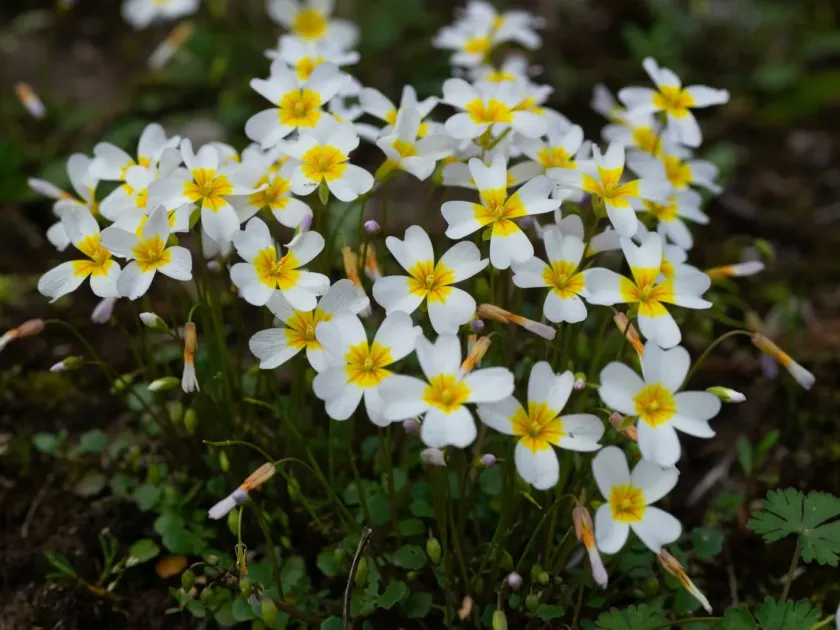
Description
Growing requirements
Leavenworthia alabamica is a distinctive annual herbaceous plant belonging to the Brassicaceae family. It is endemic to the central region of Alabama, USA, where it occupies highly specific geological niches.
The species primarily thrives on limestone glades, which are open habitats characterized by shallow soils overlying bedrock. These environments are subject to extreme fluctuations in soil moisture and temperature throughout the seasons.
For successful growth, this plant requires full sun exposure and minimal competition from other vegetation. The soil must be alkaline, reflecting the limestone origin, which is crucial for the plant's metabolic processes and development.
The botanical structure consists of basal rosettes and characteristic cruciform flowers that facilitate efficient pollination. Leavenworthia alabamica has evolved various reproductive strategies, including self-incompatibility, which is a major focus for genetic studies.
In terms of agricultural and scientific application, it is not grown as a standard crop. Instead, it serves as a critical model organism for biologists studying plant evolutionary genetics, reproductive systems, and adaptation to marginal ecological environments.