
New Zealand laurel
Laurelia novae-zelandiae
Description
Growing requirements
New Zealand laurel, known locally as Pukatea, is a tall evergreen tree belonging to the Atherospermataceae family. It is a signature species of the New Zealand native rainforests, typically found in low-lying, swampy, or alluvial lowland areas where the soil remains consistently moist throughout the year.
The tree thrives in mild maritime climates where rainfall is abundant and evenly distributed. It prefers deep, nutrient-rich soils that have high organic content. The presence of buttress roots is a primary botanical adaptation, allowing the tree to maintain stability in soft, saturated soil conditions often encountered in its natural habitat.
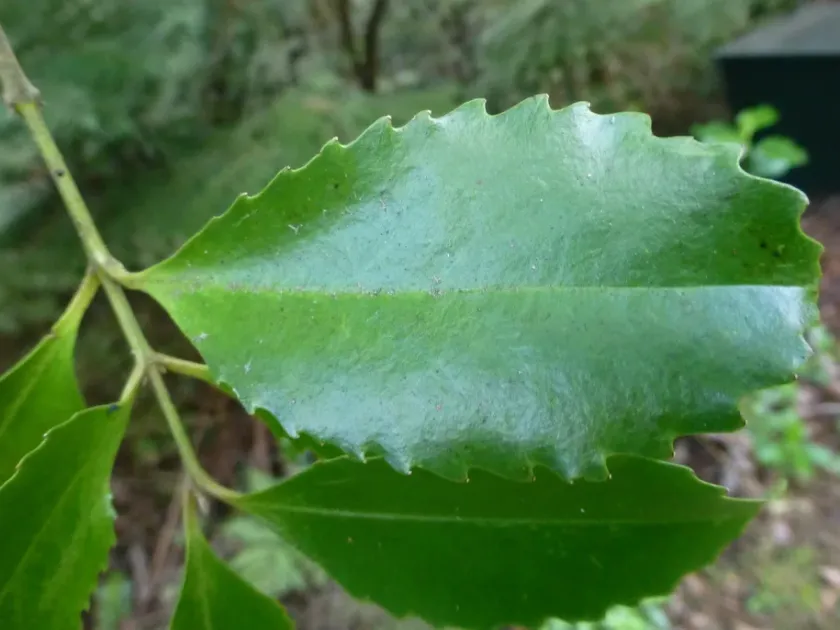
Botanically, the Pukatea is distinct for its fragrant, serrated leaves and smooth grey bark, which sometimes features distinctive patterns. It can reach heights of up to 35 meters, serving as a climax species in the forest canopy. The tree produces small flowers, which are primarily insect-pollinated, followed by small, winged seeds that facilitate natural dispersal.
In terms of forestry management, the species requires shade during its initial growth phases to prevent desiccation and promote straight trunk development. Proper site selection is crucial; areas with poor drainage are less suitable for high-quality timber production. Maintaining a microclimate similar to natural forest floors helps in reducing stress on younger specimens.
Economically, the timber of the New Zealand laurel is prized for being lightweight yet relatively durable, making it suitable for boat building, fine furniture, and cabinet making. Given its cultural significance, any commercial use is typically managed under strict environmental guidelines to ensure the regeneration of native stands and the protection of forest biodiversity.
Main diseases and pests
The most significant threats to the species are invasive mammals, particularly possums, which heavily browse on the young foliage and strip the bark, often leading to tree mortality. Furthermore, seedlings and saplings are susceptible to soil-borne pathogens if the drainage is compromised, necessitating careful site maintenance in managed forest blocks.