
Langsdorffia hypogaea
Langsdorffia hypogaea
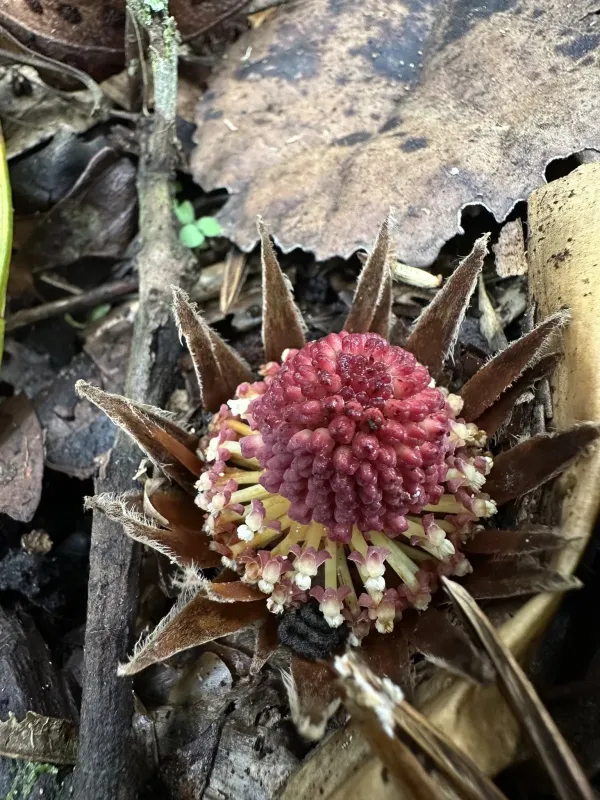
Description
Growing requirements
Langsdorffia hypogaea is a specialized parasitic plant species belonging to the Balanophoraceae family. Lacking any chlorophyll, it cannot perform photosynthesis and relies entirely on host plant roots to survive and thrive.
The plant is native to tropical rainforest regions, primarily in parts of Central and South America, as well as Madagascar. It lives mainly underground, appearing above the soil surface only during its reproductive phase to bloom.
Botanically, it features a unique structure, with tuberous underground parts and fleshy, mushroom-like inflorescences. This morphology allows it to minimize water loss and protect its reproductive structures from the harsh tropical forest floor conditions.
Growth requirements are inextricably linked to the host organism. It demands specific root-system environments where it can establish haustorial connections to extract water and nutrients directly from the host's vascular tissues.
As this species does not possess any significant agricultural use, it is not cultivated in a traditional farming sense. Research remains focused on its complex evolutionary adaptations to parasitic life and its ecological role within tropical biodiversity.
Main diseases and pests
The primary threat to Langsdorffia hypogaea is habitat destruction, specifically the logging of tropical forests. Since the plant is a strict specialist, the removal of its host tree species ensures the local extinction of the parasite.
Soil-borne pathogens and fungal infections are constant threats, as the plant's high water content and nutrient-rich tissues make it susceptible to decay in moist tropical soil conditions.
Various forest-dwelling insects and small rodents consume the fleshy reproductive parts of the plant. This grazing can significantly reduce the number of seeds produced and hinder the population's ability to regenerate.
Climate shifts that alter soil moisture levels or the health of host trees have a cascading negative effect on the plant's survival. Its reliance on a healthy host makes it sensitive to environmental changes.
Since the species has no agronomic value, no pest control programs or cultivation techniques are documented. Protection efforts are currently limited to conserving the fragile ecosystems where it is naturally found.