
Lachnagrostis billardierei
Lachnagrostis billardierei
Description
Growing requirements
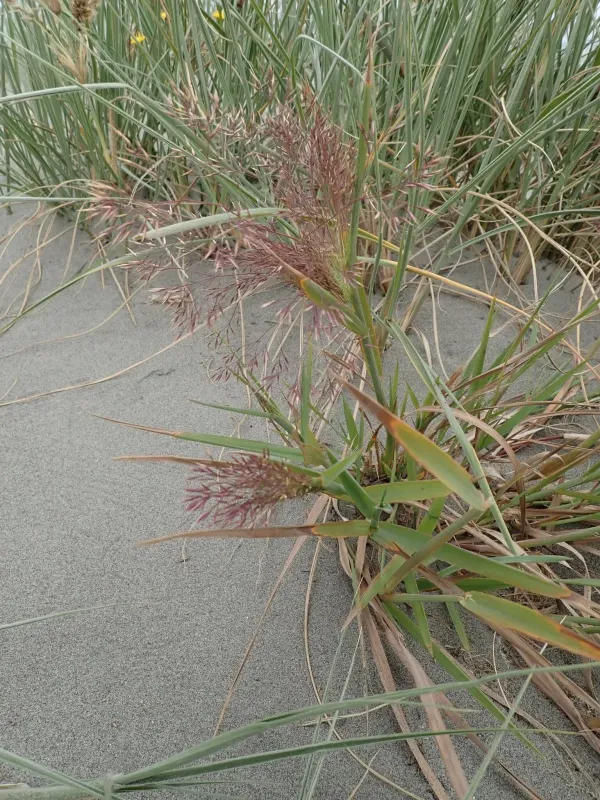
Lachnagrostis billardierei is a perennial grass species belonging to the Poaceae family. Native to the coastal regions of Australia and New Zealand, this plant has evolved to thrive in harsh environments, particularly in sandy soil habitats such as coastal dunes.
The culture is characterized by its high salt tolerance and ability to adapt to nutrient-poor soils. These traits make it an essential plant for soil stabilization and environmental restoration projects, as it prevents erosion by holding shifting sands with its dense root system.
Botanically, the plant forms thin, erect stems ranging from 20 to 60 cm in height, with narrow, often rough-textured leaves. This morphology is an adaptation to reduce transpiration and withstand the strong, desiccating winds typical of its natural coastal range.
Cultivation requires well-drained, sandy conditions and plenty of sunlight. While the species is highly resilient to drought, optimal growth is achieved in areas where it can access moderate soil moisture during the establishment phase, ensuring the development of a robust root architecture.
In addition to its ecological utility, Lachnagrostis billardierei has potential applications in agricultural research, particularly in the development of salt-tolerant forage varieties. Its ability to survive in marginal soils offers a model for sustainable crop management in arid and saline agricultural zones.
Main diseases and pests
The primary pathological threats to Lachnagrostis billardierei include fungal infections such as rust diseases, which thrive in high-humidity conditions. These pathogens can compromise the photosynthetic efficiency of the grass, leading to significant biomass reduction if left unmanaged.
Pest populations, including aphids and various root-feeding larvae, pose a constant threat to the plant's structural integrity. These pests can weaken the plant, making it susceptible to secondary infections and reducing its overall lifespan in managed landscapes.
Overgrazing represents a major threat to the preservation of natural stands of this species. Livestock grazing can lead to severe compaction of the soil and physical destruction of the rhizomes, which prevents the grass from effectively performing its role as a dune stabilizer.
Invasive weed species compete aggressively with this grass for nutrients and space. Proper land management practices, including mechanical weeding and controlled vegetation management, are essential to ensure that the population remains healthy and dominant within its ecological niche.
Environmental stressors like prolonged flooding or anomalous heatwaves can disrupt the physiological balance of the plant. Field monitoring and the application of micronutrient supplements are recommended to enhance the natural defense mechanisms of the culture against such abiotic stressors.