
Alpine laburnum
Laburnum alpinum (Mill.) Bercht. & J. Presl
Description
Growing requirements
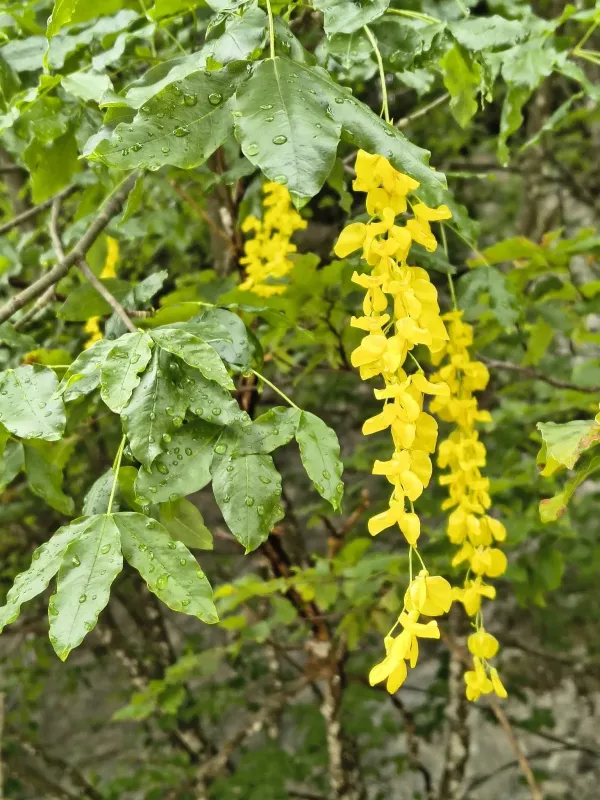
The Alpine laburnum (Laburnum alpinum) is a deciduous tree or shrub belonging to the Fabaceae (Leguminosae) family. It is native to the mountains of Central and Southern Europe and is widely prized for its striking yellow racemes.
This species thrives in well-drained, moderately fertile soils. It prefers neutral to slightly alkaline soil conditions and performs poorly in heavy, waterlogged clay, where the roots are susceptible to decay.
Full sun exposure is required for the best flowering performance. While the plant can tolerate light shade, excessive darkness will lead to leggy growth and a significant reduction in the number of flowers produced.
The tree demonstrates moderate hardiness, generally tolerating cold winters down to USDA zone 5 or 6. However, young trees require protection from harsh frost and wind to ensure successful establishment during the first few years.
All parts of the Laburnum are toxic if ingested due to the presence of cytisine. It is essential to choose planting locations away from livestock pastures and areas frequented by young children.
Main diseases and pests
Aphids are the most common pest problem for Alpine laburnum. They tend to cluster on young shoots and buds, causing leaf curling and potential damage to the upcoming blossoms if left untreated.
Powdery mildew is a common fungal issue that manifests as a dusty white coating on leaves, particularly during warm and humid weather conditions with poor air circulation.
Leaf spot diseases can also occur, leading to premature defoliation. Keeping the area under the canopy free of leaf debris and applying preventative fungicide sprays can help manage these issues.
Root rot is a major threat in soils with poor drainage. Once established, this condition is difficult to treat, making proper soil preparation before planting the most effective form of prevention.
- Regular inspection of the foliage during the growing season.
- Sanitary pruning of dead or diseased branches to maintain plant health.
- Consistent monitoring of soil moisture levels.