
Macedonian scabious
Knautia macedonica Griseb.
Description
Sowing dates
Sowing Knautia macedonica seeds is typically performed in late autumn or early spring, as the seeds require a cooling period to ensure uniform germination.
For indoor propagation, sow seeds in trays during early spring, covering them with a very thin layer of substrate since they need light to germinate properly.
Transplanting into the garden should occur once the seedlings are strong enough and the risk of harsh frost has passed to ensure successful establishment.
Spacing is essential for this species; maintaining a distance of 30 to 40 centimeters between individual plants prevents competition and overcrowding.
Self-seeding is a common trait of this plant, so gardeners should be prepared to thin out volunteers if the plant is intended to be kept within specific borders.
Growing requirements
Macedonian scabious belongs to the Caprifoliaceae family and is an herbaceous perennial native to the regions of Southeastern Europe and the Balkans.
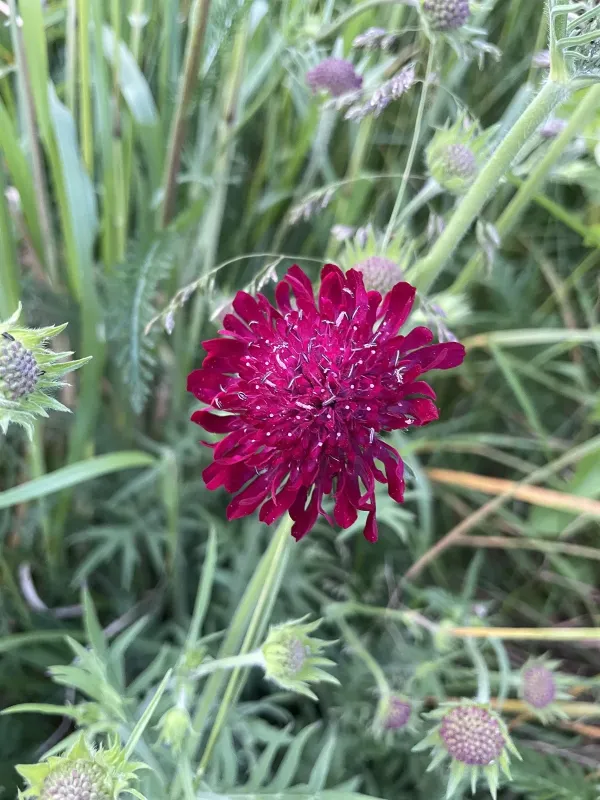
The plant thrives in full sun conditions, which are necessary to produce its characteristic intense, deep crimson-red button-like flower heads.
It prefers well-drained, neutral to alkaline soil and is known for its remarkable ability to tolerate dry conditions once the root system is established.
Standard agronomic maintenance includes deadheading spent flowers to encourage a second flush of blooms throughout the late summer and early autumn.
This species is highly valued for its naturalistic look, fitting well into wildflower meadows, gravel gardens, or traditional perennial borders.
Main diseases and pests
The primary concern for Knautia macedonica is waterlogged soil, which creates an environment conducive to root rot and other moisture-related pathogens.
Powdery mildew is a frequent foliar disease, especially in areas with high humidity or poor air circulation between the dense foliage of the plants.
Aphids are the most common insect pest, typically targeting the tender flower buds and causing stunted growth if not managed promptly.
Slugs and snails may attack young seedlings or fresh growth in the spring, making protective measures necessary in damp garden environments.
Regular inspection and sanitation of the growing area are recommended to prevent the buildup of fungal spores and overwintering insect populations.