
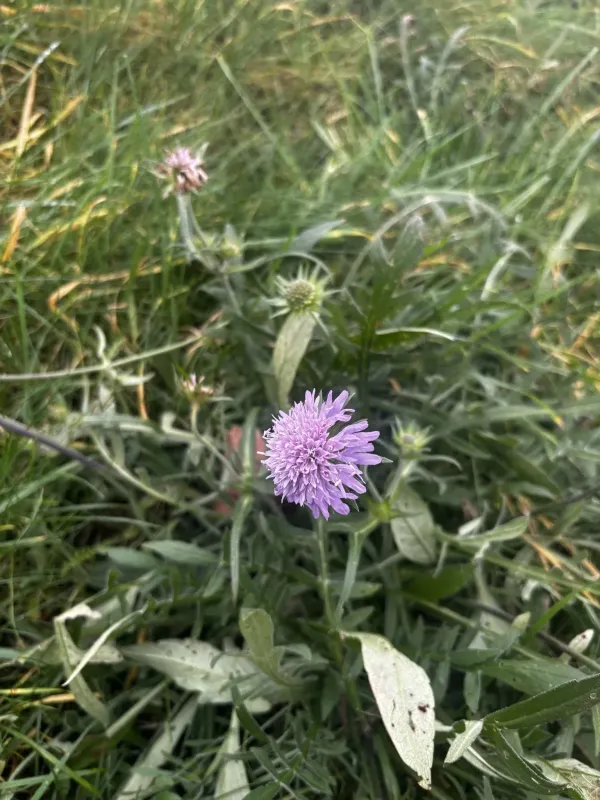
Field scabious
Knautia arvensis (L.) Coult.
Description
Sowing dates
Field scabious is a perennial herbaceous plant belonging to the Caprifoliaceae family, native to Europe and Western Asia.
Sowing is typically performed in late autumn or early spring, as the seeds require a period of stratification to break dormancy and ensure consistent germination.
Seeds should be sown at a depth of 1–2 cm, maintaining row spacing of approximately 30–45 cm for optimal development of individual plants in the field.
Growth during the first year is primarily vegetative, focusing on the establishment of a robust basal rosette, which necessitates careful weed management during this phase.
The seeding rate varies depending on the purpose of the crop, but generally ranges from 8 to 10 kg/ha to achieve a uniform plant stand in the second year.
Growing requirements
This species thrives in sunny locations and is well-adapted to open meadows and field borders, making it an excellent choice for diverse agricultural landscapes.
Field scabious prefers fertile, well-drained loam or sandy soil with a neutral to slightly alkaline pH, often associated with calcium-rich substrates.
The plant demonstrates remarkable tolerance to drought and cold, allowing it to flourish in various temperate climate zones without specialized shelter.
Excessive soil moisture is detrimental; therefore, sites with poor drainage or high water tables should be avoided to prevent root and crown rot.
Moderate fertilization with phosphorus and potassium is beneficial to support structural integrity and encourage long-lasting, vibrant flowering periods.
Yield
The plant serves as a valuable forage crop, contributing to the nutritional quality of hay when integrated into balanced livestock feed mixtures.
Its prolonged flowering period makes it an outstanding nectar source for pollinators, significantly benefiting biodiversity in and around farmland.
The biomass of field scabious contains bioactive compounds that may offer health-promoting benefits when consumed by livestock as part of a forage ration.
With proper management, the crop can yield substantial biomass, often reaching 15–20 tonnes of green matter per hectare under favorable conditions.
High seed yield potential is a characteristic of this species, facilitating efficient propagation for large-scale agricultural or restoration projects.
Main diseases and pests
Powdery mildew is the most common fungal disease, especially in dense plantings where airflow is restricted and humidity remains consistently high.
Weevil species can cause significant damage to the floral heads, which poses a serious challenge for farmers aiming to collect high-quality seed batches.
Integrated pest management strategies are crucial, focusing on maintaining field hygiene to prevent the buildup of insects and harmful plant pathogens.
Rodents may pose a threat by feeding on root systems during winter months, which can significantly thin the plant population over multiple years.
The use of chemical insecticides should be strictly avoided during the flowering phase to protect local honeybee and native bumblebee populations.
Harvesting
Harvesting for forage should occur during the peak flowering stage to capture the highest nutrient concentration before the seeds begin to develop.
Cutting should be performed at a height of 8–10 cm above the ground to ensure rapid regrowth and preserve the plant's long-term vitality for subsequent cuts.
For seed production, a two-stage harvesting method is recommended: cutting the stems when seeds are mature, followed by field drying and threshing.
Care must be taken to minimize seed shattering during the mechanical harvesting process by adjusting equipment settings for gentle handling.
Post-harvest processing includes cleaning and drying seeds to a stable moisture content to maintain high germination rates for future sowing seasons.