
Dusky coral pea
Kennedia rubicunda
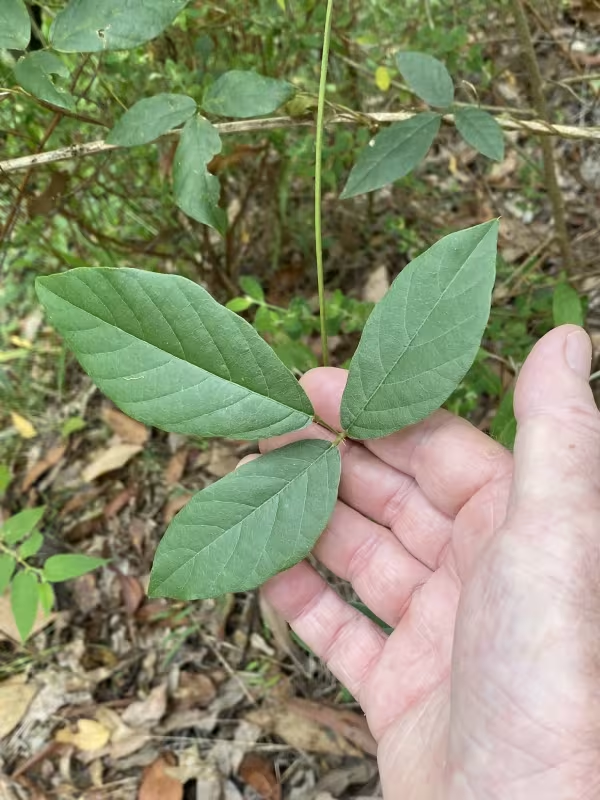
Description
Sowing dates
Kennedia rubicunda, commonly known as the Dusky coral pea, is a vigorous perennial climber belonging to the Fabaceae family, native to Eastern Australia.
Seeds should be sown in spring. Because of their hard seed coat, pre-treatment by soaking in hot water is essential to initiate the germination process successfully.
The plant is typically propagated in pots or nursery trays before being moved to its permanent location once the risk of frost has completely passed.
Seedlings develop a substantial root system early, so transplanting should be handled carefully to avoid disturbing the root ball too much.
When sowing, ensure the medium is well-draining, as the seedlings are susceptible to rotting if kept in waterlogged conditions during the early stages of growth.
Growing requirements
This species thrives in sunny or semi-shaded environments. It adapts well to various soil types but performs best in well-drained, slightly acidic to neutral garden soil.
As a robust climber, it requires substantial support structures like fences, trellises, or pergolas to reach its full potential and display its red, pea-like flowers.
The plant is moderately drought-tolerant once established but benefits from regular deep watering during its primary growing season in the warmer months.
It prefers mild climates. In regions with freezing temperatures, it must be grown in containers that can be moved indoors or protected during winter months.
Regular pruning is beneficial for maintaining the desired shape and promoting thicker growth, as the vines can grow several meters in a single season.
Main diseases and pests
Root rot is the most common issue for Kennedia rubicunda, usually triggered by poor soil drainage and excessive moisture accumulation around the base.
Sap-sucking insects like aphids can cluster on the tender new growth, causing leaf curling and potentially stunting the overall development of the plant.
Spider mites can also be a problem, especially in dry, sheltered conditions, as they feed on the underside of leaves and cause them to yellow or dry out.
Powdery mildew may occur if air circulation is insufficient, particularly when plants are grown in overcrowded conditions or closed structures.
Integrated pest management, including monitoring and the use of targeted horticultural soaps or oils, helps keep the population of pests at a manageable level.