
Junellia spathulata
Junellia spathulata
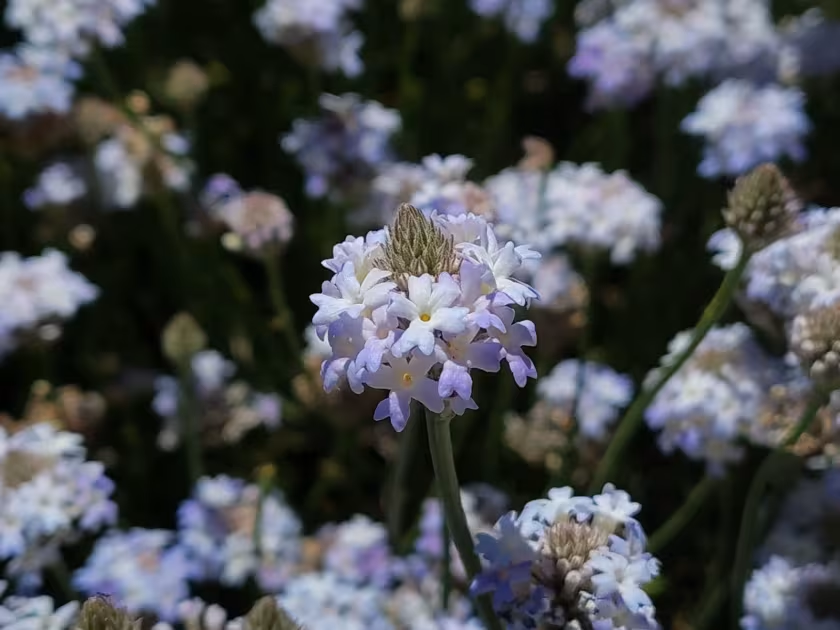
Description
Growing requirements
Junellia spathulata belongs to the Verbenaceae family and is recognized as a hardy, cushion-forming perennial. Native to the harsh mountainous terrain of Patagonia and the Andes, this plant is evolutionary adapted to extreme environmental stress.
Botanically, it features small, spathulate leaves covered in fine hairs that provide protection against cold winds and intense UV radiation. Its compact growth habit is a survival mechanism designed to conserve thermal energy and moisture in high-altitude habitats.
Agronomically, the plant demands well-draining, poor, and stony substrates. It is essential to avoid moisture-retentive soils or nutrient-rich compost, as these conditions stimulate weak, etiolated growth and increase susceptibility to environmental stressors.
The climate requirements involve high light intensity and exposure to direct sunlight throughout the day. It thrives in regions with significant temperature fluctuations, typical of alpine ecosystems, but requires protection from prolonged periods of excessive atmospheric humidity.
In terms of agricultural use, Junellia spathulata is valued for xeriscaping and alpine rock gardens. Its ability to tolerate drought and poor soil conditions makes it a sustainable choice for landscaping projects in arid or semi-arid climates.
Main diseases and pests
The primary threat to the health of the plant is root rot, typically caused by waterlogged soil and poor air circulation. Overwatering or lack of proper drainage leads to the rapid proliferation of soil-borne pathogens, which can be fatal for the plant.
Spider mites represent a frequent pest concern, particularly in hot and dry weather conditions. These pests suck the cell sap from the foliage, leading to yellowing and desiccation, which can compromise the plant's aesthetic and physiological state.
Aphids may occasionally colonize tender flower buds and shoots. While not always lethal, they can deform the plant structure and serve as vectors for secondary viral infections, necessitating regular inspection and early intervention.
Nematodes are another potential threat that can degrade the root system's function. Maintaining strict sanitation standards, including the use of sterilized gravel and pots, is the most effective strategy for preventing the introduction of these parasites.
To maintain a healthy crop, growers should implement a strict water management protocol. Mulching the surface with grit or small pebbles is highly recommended to keep the foliage and crown dry, thereby reducing the risk of fungal infections.