
Julbernardia pellegriniana
Julbernardia pellegriniana
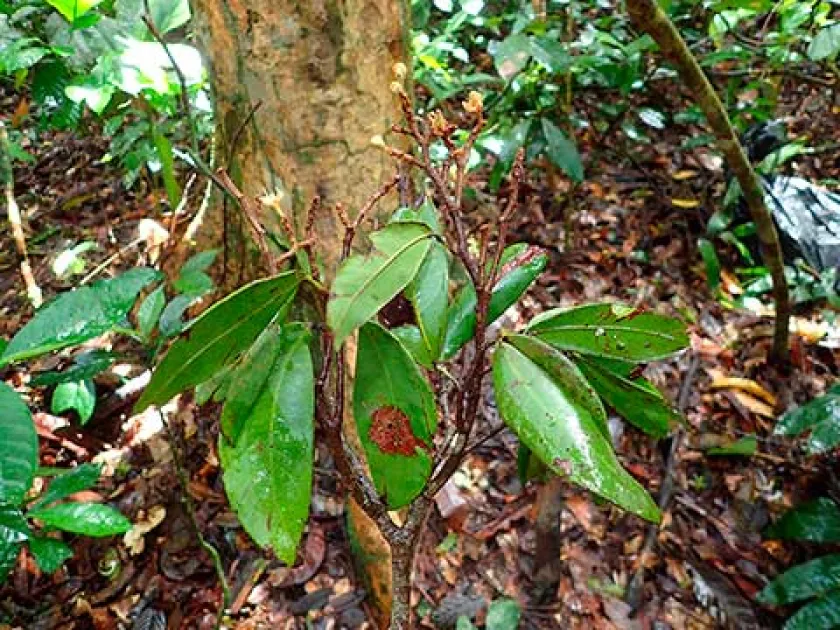
Description
Growing requirements
Julbernardia pellegriniana is a majestic tropical tree belonging to the family Fabaceae. Native to the dense tropical forests of Central Africa, this species is well-adapted to the high-humidity environments of the equatorial belt, playing a vital role in local forest structure.
Botanically, the tree exhibits a robust growth habit with a thick trunk and a dense, spreading canopy. Its biological adaptation to the competitive forest environment allows it to capture maximum sunlight, which is essential for its significant biomass accumulation over time.
Climatic requirements are strict: the tree thrives in areas where temperatures remain consistently high throughout the year. It requires a high level of atmospheric humidity and is poorly adapted to environments with prolonged dry seasons or extreme temperature drops.
The ideal soil profile for this species includes deep, fertile, and well-drained substrate. It is highly intolerant of waterlogged conditions, which can lead to root system degradation. Proper site selection must emphasize natural drainage and soil depth to support its long-term development.
Cultural practices for successful establishment involve careful management of young seedlings. Protection from intense direct sunlight during the early stages, followed by selective thinning as the tree matures, is crucial for promoting healthy growth rates.
Yield
The primary economic value of Julbernardia pellegriniana is centered on its premium timber. Known for its durability and structural integrity, the wood is highly sought after for high-end furniture manufacturing, fine carpentry, and structural construction projects.
Yield estimation for this culture is performed over long-term forestry cycles rather than annual harvest. Sustainability is key, as the slow-growing nature of the species necessitates a rotation policy that balances immediate economic needs with long-term forest health.
The tree also holds scientific interest due to the potential biochemical compounds found in its tissues. Ongoing research explores the utility of its wood extracts and secondary products, which could provide additional value beyond traditional timber applications.
Ecologically, the species provides significant ecosystem services by sequestering carbon and enriching soil nitrogen levels through its association with symbiotic microorganisms. This makes it a foundational species for reforestation programs in tropical areas.
Data on wood productivity per hectare suggests that under optimal conditions, the species contributes significantly to local forest economies. Careful inventory management ensures that the harvest remains within sustainable limits while maintaining high output quality.