
Jasminocereus thouarsii
Jasminocereus thouarsii
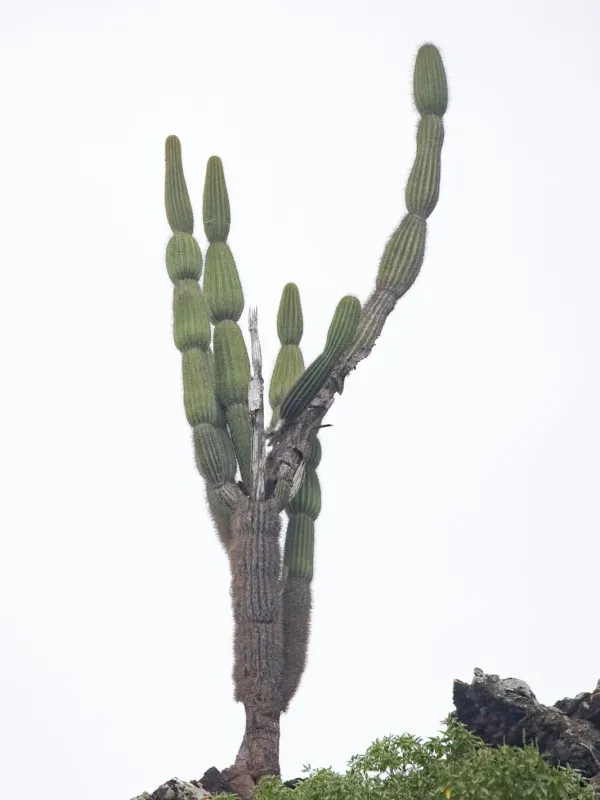
Description
Growing requirements
Jasminocereus thouarsii is a treelike cactus belonging to the Cactaceae family. In its native habitat, it grows as a large, heavily branched succulent that can reach heights of several meters, resembling a candelabra.
This species is endemic to the Galapagos Islands, where it thrives in arid, rocky, and volcanic environments. Its biology is strictly adapted to survive long periods of drought and nutrient-poor, well-draining soils.
To cultivate this species successfully, growers must provide a highly porous substrate consisting of coarse sand, gravel, and minimal organic matter. Proper drainage is the most critical factor to prevent root rot.
The species requires intense solar radiation and high temperatures to maintain its structural integrity. It is sensitive to prolonged cold and moisture, which can trigger rapid tissue decay.
Economic use of Jasminocereus thouarsii is primarily centered on specialized botanical collections and landscaping in tropical regions, where its aesthetic and architectural value is highly regarded by enthusiasts.
Main diseases and pests
Fungal pathogens associated with overwatering or high humidity represent the primary threat to the health of the cactus, often leading to necrosis of the basal and stem tissues.
Pests such as mealybugs and spider mites are frequent invaders in indoor or greenhouse settings, sucking plant fluids and reducing the plant's overall vitality.
Secondary infections often follow pest damage, as the weakened plant tissue becomes vulnerable to opportunistic bacteria and fungi in the environment.
Maintaining a dry, well-ventilated atmosphere is essential to protect the surface of the cactus from common pathogens that thrive in stagnant air conditions.
Proactive management, including regular inspection and the use of targeted pesticides, is necessary to keep the specimens healthy and prevent the spread of infestations.