
Japanese parsley
Cryptotaenia japonica Hassk.
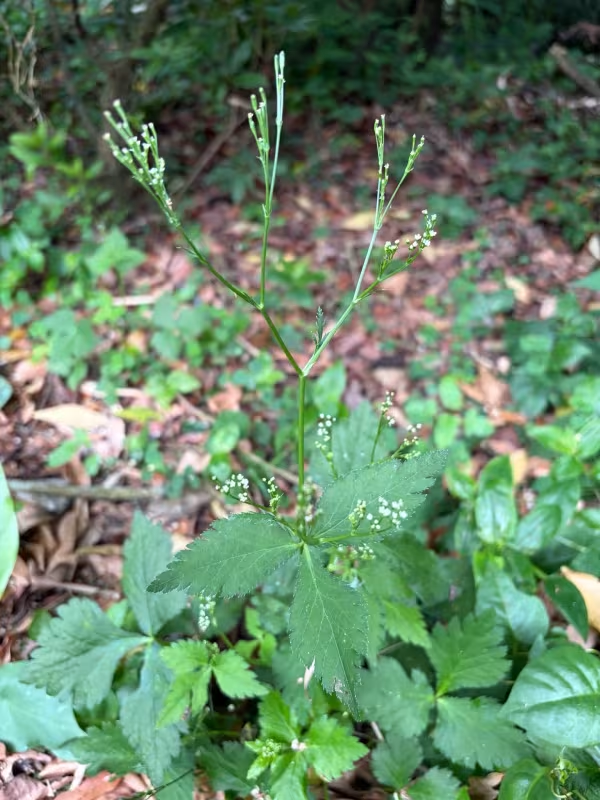
Description
Sowing dates
Japanese parsley, commonly referred to as Mitsuba, is a perennial herb belonging to the Apiaceae family. It is widely cultivated as an annual crop for its aromatic foliage.
Seeds should be sown in early spring as soon as the soil is workable. The seeds require shallow sowing, covered with about 1 cm of fine, moist soil for optimal germination.
Starting plants indoors in seedling trays is recommended for early production. Seeds typically germinate within 14–21 days when kept at temperatures around 18 degrees Celsius.
Successive sowings every three weeks are advisable to maintain a continuous harvest of tender leaves throughout the entire growing season.
The seeds have a low germination rate if stored improperly, so it is best to use fresh seeds from the current season for the highest success rate.
Growing requirements
This plant performs best in partially shaded locations. Exposure to intense, direct afternoon sun often results in bitter, tough leaves and premature bolting.
The ideal soil is rich in organic matter, loose, and well-draining, with a pH ranging from 6.0 to 7.0. Adding compost before planting greatly boosts yields.
Consistent soil moisture is essential for producing high-quality greens. Mulching the area helps retain moisture and prevents the soil from drying out too quickly.
Temperature management is key; the plant prefers cool to moderate weather. High temperatures lead to rapid stem elongation, which reduces the leaf-to-stem ratio.
Adequate spacing between plants, usually 15–20 cm, is necessary to promote good air circulation, which helps reduce the risk of common fungal issues.
Main diseases and pests
Aphids and spider mites are the most common pests that affect the crop, particularly in dry and poorly ventilated conditions throughout the summer months.
Powdery mildew is a significant threat to Mitsuba, characterized by white spots on the leaves, which occurs due to humidity issues and crowded plant spacing.
Root rot caused by pathogens like Pythium can occur in waterlogged or heavy soils. Ensuring proper drainage is the most effective preventative measure against this threat.
Control of these pests and diseases is best achieved through integrated pest management, avoiding heavy chemical sprays to preserve the herb's delicate flavor profile.
Regular inspection of the underside of the leaves is recommended to catch pest infestations early, allowing for effective intervention before the population explodes.
Harvesting
The harvest period typically begins 8 to 10 weeks after sowing. The entire plant can be cut back, or individual leaves can be harvested as needed by the kitchen.
When harvesting, ensure the base of the plant is not damaged, as this allows for regrowing multiple cuttings throughout the season, significantly increasing yield.
In traditional Japanese cuisine, not only the leaves are harvested, but also the blanched stems and occasionally the roots, which have a unique nutty flavor.
Post-harvest handling is critical because the leaves wilt quickly. They should be chilled immediately and stored in a plastic bag in the refrigerator to maintain freshness.
If saving seeds, allow the flower stalks to mature fully until they turn brown. Collect the seeds, dry them completely, and store in a cool, dark, and dry container.