
Japanese pieris
Pieris japonica (Thunb.) D. Don ex G. Don
Description
Growing requirements
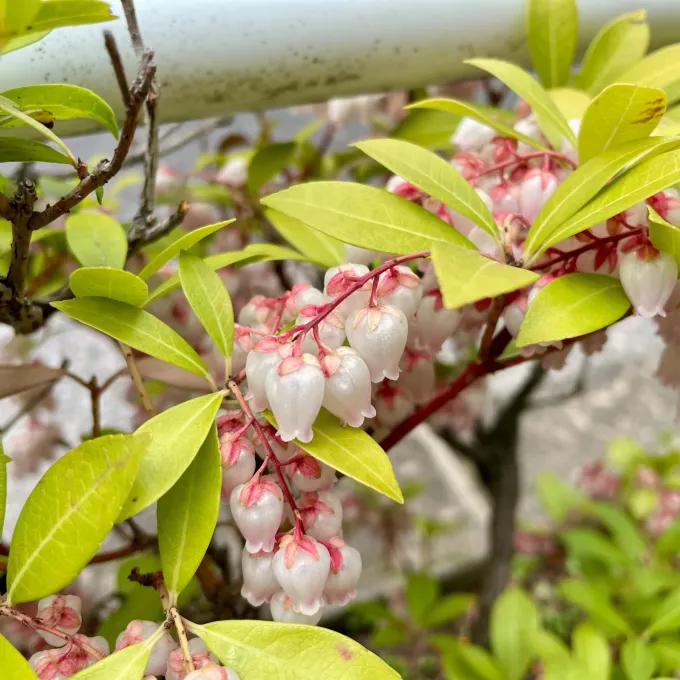
Japanese pieris (Pieris japonica) belongs to the Ericaceae family. It is a slow-growing evergreen shrub, widely recognized for its pendulous clusters of bell-shaped flowers and attractive red or bronze new foliage.
The plant originates from the mountain regions of Eastern Asia. Due to its ornamental value, it is cultivated globally as a key feature in woodland gardens and acidic soil landscapes.
The culture requires specific soil conditions to thrive. It necessitates acidic soil with a pH ranging from 4.5 to 5.5. A well-draining environment is critical, as the roots are highly sensitive to waterlogging and poor soil aeration.
Ideal planting sites provide partial shade or filtered light. While it can tolerate more sun in cooler northern climates, it requires protection from intense midday heat and strong, drying winds in warmer regions.
Maintenance involves frequent mulching with organic acidic materials like pine bark or leaf mold. This practice preserves soil moisture, suppresses weeds, and consistently provides the necessary acidity for healthy growth.
Main diseases and pests
Spider mites are the most common pest, often appearing during dry and warm weather. They pierce the leaf tissue, causing a speckled, dull appearance on the foliage and potential leaf drop if left unchecked.
Phytophthora root rot is the most devastating disease, typically caused by heavy, poorly drained soils. It creates conditions where the roots fail to absorb water, causing the foliage to wilt and turn brown.
Leaf spot diseases are occasionally observed, particularly when the shrub is planted in areas with poor airflow. These fungal infections appear as dark patches on the leaves, which can spread if conditions remain humid.
Lace bugs can also infest Japanese pieris, causing a bleached, stippled appearance on the upper leaf surface. Early detection and the use of insecticidal soaps are the most effective management strategies.
Nutrient deficiencies, particularly iron chlorosis, occur when the soil pH rises above the optimal range. Regular testing and application of soil acidifiers or chelated iron help keep the foliage vibrant and healthy.