
Pieris formosa
Pieris formosa (Wall.) D. Don
Description
Growing requirements
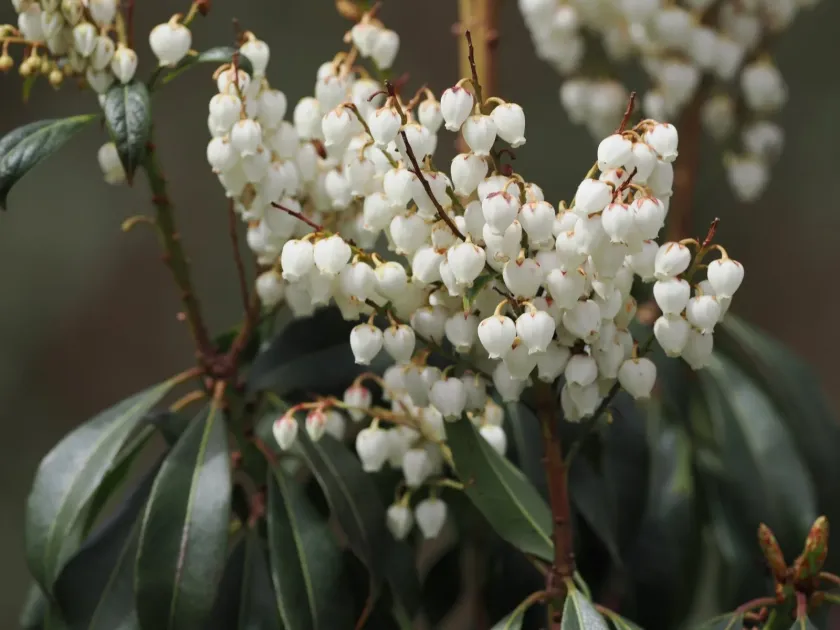
Pieris formosa is a robust evergreen shrub or small tree belonging to the Ericaceae family. It is highly valued for its striking, drooping panicles of bell-shaped flowers and its attractive, glossy, lance-shaped foliage which often emerges in shades of bronze or red.
Native to the Himalayas and mountain regions of East Asia, this species thrives in climates with cool, moist air. In cultivation, it prefers sheltered sites that protect the plant from harsh winds and late spring frosts which can damage tender new growth.
The fundamental requirement for successful growth is acidic soil. A pH range between 4.5 and 5.5 is ideal. The growing medium must be well-drained and rich in organic matter, such as leaf mold or pine bark, to simulate its natural forest-floor habitat.
While Pieris formosa can tolerate sun, it performs significantly better in semi-shaded areas. Intense direct sunlight, especially in warmer regions, can scorch the leaves and cause excessive drying of the soil, stressing the plant's shallow root system.
Maintenance involves regular watering during dry spells, ensuring the moisture reaches the root zone. Fertilizing should be limited to specific ericaceous formulations applied early in the spring, ensuring that no lime or heavy salts are introduced to the soil profile.
Main diseases and pests
Phytophthora root rot is the most serious threat to Pieris formosa. It typically occurs in waterlogged soils where oxygen availability to the roots is compromised, leading to rapid decline.
Leaf spot diseases caused by various fungal pathogens can appear during wet seasons. Improving air circulation around the shrub through judicious pruning helps in managing these infections.
Lace bugs are specific pests that feed on the underside of leaves, causing a stippled, yellow appearance. If left untreated, they can severely weaken the plant and reduce its aesthetic value.
Spider mites are common in drier environments. They create fine webbing and cause leaf chlorosis, requiring the application of specialized miticides or consistent overhead misting to deter them.
General plant vigor is the best defense against threats. Providing correct site conditions and preventing soil compaction are the primary steps in ensuring the long-term health of the shrub.