
Hyssop
Hyssopus officinalis L.
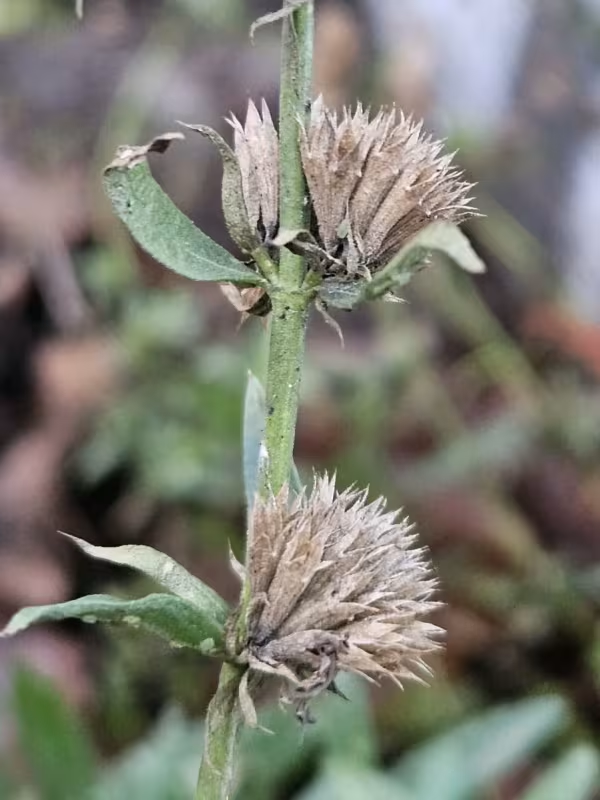
Description
Sowing dates
Hyssop (Hyssopus officinalis L.) is a perennial subshrub belonging to the Lamiaceae family. It is typically sown in early spring when soil temperatures reach 5-8 degrees Celsius to ensure germination.
Autumn sowing is also a viable option in some climates, allowing seeds to undergo natural stratification, which often results in more uniform emergence during the following spring.
For large-scale cultivation, seeds are sown in rows spaced 45-60 centimeters apart, providing enough room for mechanical cultivation and weeding during the early growth stages.
Seeds should be planted at a shallow depth of 1-2 centimeters. Because they are tiny, burying them too deep will significantly decrease the germination rate and seedling vigor.
Seedlings develop quite slowly during their first month of life, requiring diligent management of weeds to prevent competition for nutrients, light, and water.
Growing requirements
Hyssop thrives in full sun and requires well-drained soil, preferably of a sandy or loamy texture. It does not tolerate waterlogged conditions, which can lead to root rot.
The plant is highly drought-tolerant once established, making it a suitable crop for regions with limited rainfall or for areas where sustainable, low-water agriculture is practiced.
A neutral to slightly alkaline soil pH, ranging between 6.5 and 7.5, is optimal for maximizing the nutrient uptake and the overall essential oil production of the plant.
It exhibits strong winter hardiness and can survive in diverse climatic zones, though it appreciates being protected from cold, desiccating winds in extreme winter environments.
Balanced fertilization, particularly with potassium and phosphorus, supports the development of strong, resilient stems and increases the concentration of beneficial essential oils.
Yield
Under optimal management, a healthy hyssop plantation can produce between 1.5 and 3 metric tons of dried herbal material per hectare annually after the first year of growth.
Hyssop stands are highly productive for a period of 5 to 7 years, after which the vigor of the plants typically declines and replanting or rejuvenation is recommended.
The yield of essential oil is a critical commercial metric, with concentrations typically ranging from 0.5% to 1.2% of the dried mass depending on the specific variety.
Frequent, light pruning after harvesting promotes denser vegetative growth, which helps in maintaining high yields across subsequent years of the plant's life cycle.
Careful timing of the harvest is essential, as the balance between leaf mass and essential oil concentration determines the economic value of the total yield.
Main diseases and pests
Although hyssop is naturally hardy, it can be susceptible to fungal diseases such as powdery mildew, especially in environments with poor air circulation or excessive humidity.
Common pests like aphids and spider mites may target the soft terminal shoots during hot and dry spells, potentially reducing the quality of the harvest if left untreated.
Root rot is the most common physiological threat, often caused by poorly drained soils or over-irrigation, which can kill entire patches of the crop if not addressed.
Integrated Pest Management (IPM) practices, including the use of beneficial insects and biological fungicides, are highly recommended for maintaininig high-quality organic crops.
Crop rotation is vital to prevent the buildup of soil-borne pathogens and to maintain the long-term health and fertility of the land dedicated to hyssop production.
Harvesting
Harvesting should occur at the peak of full bloom when the concentration of essential oils is at its highest, ensuring the highest quality for medicinal or culinary uses.
The upper 20-25 centimeters of the flowering stems are cut, leaving enough healthy foliage on the lower part of the plant to support rapid regrowth for the next season.
Post-harvest, the stems must be dried quickly in a cool, dark, and well-ventilated area to prevent volatile oils from evaporating and to maintain the vibrant color of the leaves.
Once sufficiently dried, the herbs are threshed to separate the valuable leaves and flowers from the tougher woody stems, resulting in a cleaner and more uniform product.
Proper storage in airtight, light-resistant containers is necessary to preserve the potent aromatic and medicinal properties of the hyssop until it reaches the end market.