
Iresine herbstii
Iresine herbstii Hook.
Description
Growing requirements
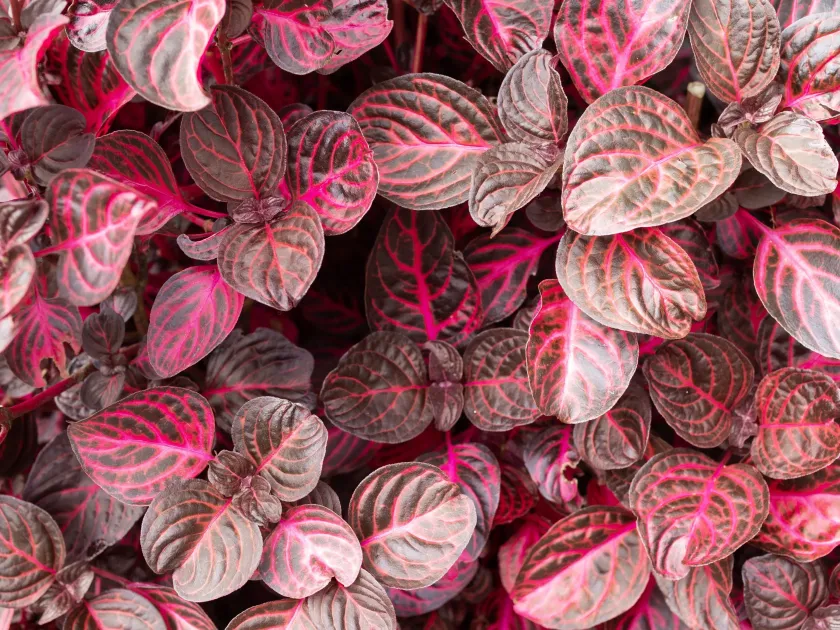
Iresine herbstii, commonly known as bloodleaf, belongs to the Amaranthaceae family and originates from the tropical regions of Brazil. It is a popular ornamental plant characterized by its striking deep red or purple foliage with bright veins.
Botanically, this perennial plant features succulent, branched stems that allow for easy propagation and shaping. It thrives in humid tropical climates and is widely cultivated as an indoor decorative plant or an annual bedding plant in warmer regions.
Light requirements are critical for the health of this species. It needs bright, filtered sunlight to maintain its vibrant leaf color; otherwise, the foliage tends to lose its intensity and the plant stems become excessively leggy.
The preferred soil should be fertile, well-draining, and slightly acidic. A mix composed of potting compost, peat, and sand provides the necessary aeration and nutrients for optimal growth during the active season.
Temperature management is vital, as the plant prefers temperatures between 18°C and 25°C. It is highly intolerant to frost and cold drafts, which can cause significant leaf drop and physiological stress to the plant.
Main diseases and pests
Spider mites are the most frequent pests affecting Iresine herbstii, particularly in indoor environments with low humidity levels. Regular misting and proper plant spacing are essential preventive measures against these tiny arachnids.
Root rot represents a major threat caused by overwatering or poor drainage. Once the roots are compromised by fungal pathogens, the plant quickly loses its ability to absorb nutrients, leading to rapid wilting and tissue decay.
Aphids can target new growth and buds, causing deformation and stunted development. If an infestation occurs, treating the plant with horticultural oils or insecticidal soap is usually effective for small to medium-sized outbreaks.
Whiteflies may also infest the plant, especially in greenhouse settings with high temperatures. Maintaining good air circulation is a key strategy to discourage these pests from establishing colonies on the underside of the leaves.
To ensure robust health, it is important to monitor the plant for signs of nutrient deficiencies, such as yellowing leaves. Consistent care, combined with a balanced fertilization schedule, helps the plant resist various diseases and environmental threats.