
Impatiens tinctoria
Impatiens tinctoria
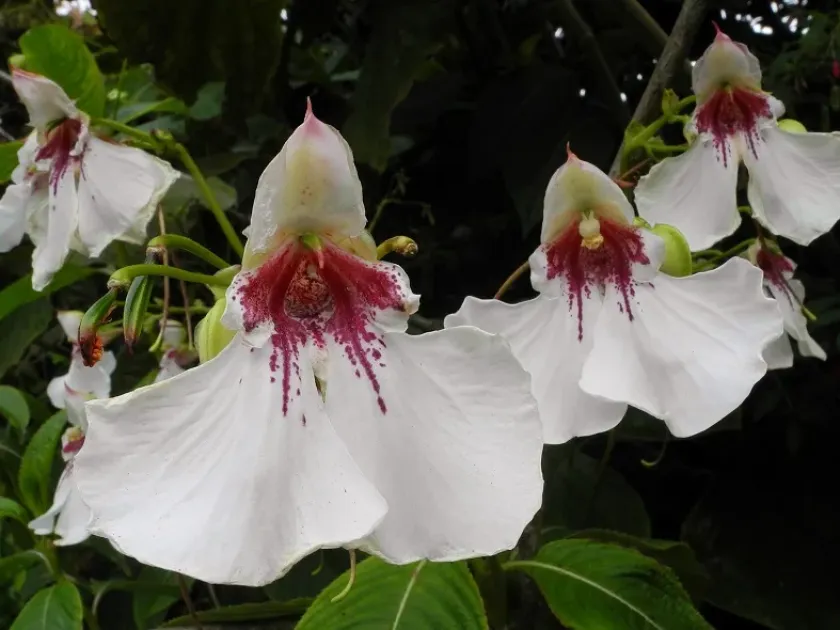
Description
Sowing dates
Sowing of Impatiens tinctoria should be carried out in early spring once the risk of frost has completely passed, as the seeds require warmth to germinate.
In regions with shorter growing seasons, starting seeds indoors in containers about 6–8 weeks before the last frost date is highly recommended for optimal results.
The seeds require light for germination, so they should be sown on the surface of the substrate and covered very lightly with fine soil or vermiculite.
Maintaining a stable temperature of +18...+22 °C is essential for successful seedling emergence, which typically takes between two and three weeks under proper conditions.
Adequate soil preparation is crucial; using a well-draining, nutrient-rich potting mix ensures healthy root development during the initial growth stages.
Growing requirements
Impatiens tinctoria belongs to the Balsaminaceae family and is a perennial tuberous plant native to the high-altitude regions of East Africa.
The plant thrives in partial shade, where it is protected from harsh midday sun that can scorch the leaves and negatively impact the bloom quality.
Ideal soil for this crop must be loose, humus-rich, and possess excellent drainage capabilities to prevent waterlogging, which the tubers cannot tolerate.
Consistent soil moisture is required throughout the growing season; regular watering is necessary, but the soil must never remain waterlogged for extended periods.
Given its tropical origin, the plant is not cold-hardy; in temperate climates, tubers must be lifted and stored indoors before the first autumn frost.
Main diseases and pests
The species is susceptible to fungal diseases such as powdery mildew, especially in environments with high humidity and poor airflow between plants.
Common pests like spider mites and aphids can frequently infest the plants, particularly in greenhouse conditions or during periods of environmental stress.
Root rot is the most significant threat, often resulting from improper watering regimes or the use of heavy, poorly aerated soil types in planting containers.
Effective pest management relies on early detection, regular plant monitoring, and the application of integrated pest management practices including biological controls.
Proper sanitation, such as removing fallen leaves and ensuring adequate spacing, helps to minimize the risk of pathogen spread within the planting area.
Harvesting
The primary agricultural interest in Impatiens tinctoria lies in its historical use as a source of natural dye, extracted primarily from its roots and stems.
Harvesting for dye extraction is typically performed at the end of the growing cycle when the plant has concentrated the maximum amount of pigment in its storage tissues.
For ornamental purposes, the harvest of blooms is not relevant, but routine deadheading is necessary to encourage continuous flowering and maintain plant vigor.
Propagation is primarily achieved through tuber division or stem cuttings, which are efficient methods for scaling up the production of this botanical variety.
Proper storage of the harvested tubers involves keeping them in a cool, dry place with sufficient ventilation to prevent rotting during their winter dormancy period.