
Poor Man's Rhododendron
Impatiens sodenii
Description
Sowing dates
Propagation is primarily achieved through stem cuttings, which root very easily in water or moist soil. This method ensures the new plants are identical to the parent, preserving desirable color traits.
Seed propagation is also possible but requires surface sowing as the seeds need light to germinate. Use a fine, moist potting mix and keep the environment at approximately 22 degrees Celsius.
Germination typically occurs within two to three weeks. It is crucial to maintain high humidity levels around the seedlings by covering them with plastic wrap until they are strong enough to be moved.
Young plants should be transplanted into individual containers once they develop a few sets of true leaves. Frequent pinching of the growing tips will encourage lateral branching and a bushier habit.
Move the plants outdoors only when all danger of frost has passed. During the active growth stage, apply a balanced liquid fertilizer every two weeks to promote continuous flowering and leaf health.
Growing requirements
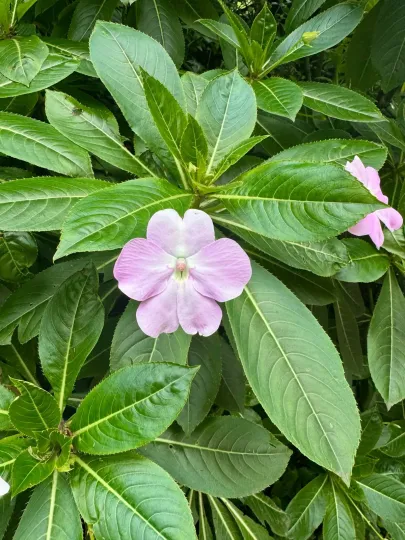
Impatiens sodenii, commonly referred to as the Poor Man's Rhododendron, is a perennial herbaceous plant belonging to the Balsaminaceae family. It is native to the tropical montane forests of East Africa, particularly Kenya.
The plant features woody, succulent stems that can grow up to 1.5 meters tall. Its lanceolate leaves are serrated at the edges and possess a glossy, dark green appearance, contributing to its ornamental value.
It thrives in partial shade or filtered light conditions, making it an excellent candidate for shaded garden spots. It is not cold-hardy and must be protected from temperatures below 10 degrees Celsius.
The ideal soil for this species is rich in organic matter, slightly acidic, and well-draining. Consistent moisture levels must be maintained, as the plant reacts poorly to both drought and waterlogging.
In temperate climates, it is often grown as an annual or a container plant. It is highly valued for its continuous display of pink, white, or lavender-colored flowers that bloom throughout the growing season.
Main diseases and pests
Common pests include spider mites and whiteflies, which thrive in dry indoor air. Increasing humidity and regular leaf misting are effective preventative measures against these common garden pests.
Overwatering can lead to stem rot and fungal diseases. It is essential to ensure that containers have adequate drainage holes and that the soil surface dries slightly between waterings.
In cases of infestation, insecticidal soaps or neem oil can be used to manage pest populations safely. Fungal issues are best addressed by improving air circulation and applying copper-based fungicides.
- Regular inspection for spider mite webbing.
- Pruning away dead or diseased stems.
- Avoiding water contact with the foliage in cold temperatures.
By keeping the plant in a well-ventilated area and avoiding water stress, you can significantly reduce the risk of common diseases, ensuring a long and vibrant life for your Impatiens sodenii.