
Small-flowered touch-me-not
Impatiens parviflora
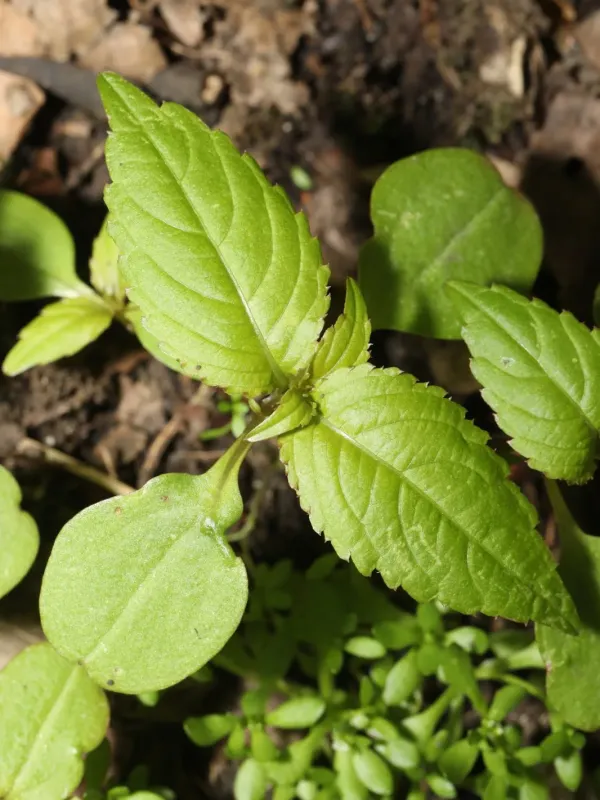
Description
Growing requirements
Small-flowered touch-me-not (Impatiens parviflora) is an annual herbaceous plant belonging to the Balsaminaceae family. Originally native to Central Asia, it has successfully naturalized in Europe and parts of North America, where it is often categorized as an aggressive invasive weed.
The plant typically grows up to 60-80 cm tall, featuring erect, branched stems and elliptical, bright green leaves. Its ability to thrive in low-light environments makes it particularly problematic in forests and shaded agricultural borders where it can rapidly form dense monotypic stands.
Environmental requirements for this species include consistent soil moisture and nutrient-rich, well-draining soil. It is highly adaptable and can establish itself quickly in disturbed areas, such as farm perimeters, neglected gardens, and woodland tracks, competing with native flora for resources.
The most distinctive biological feature of Impatiens parviflora is its explosive seed dispersal mechanism. Mature seed capsules are highly sensitive to physical pressure; when touched, they burst, catapulting seeds several meters away from the mother plant, ensuring rapid territorial spread.
From an agricultural standpoint, it serves no commercial purpose and is viewed strictly as a weed. Its rapid life cycle allows it to complete its development in a single growing season, making it a persistent nuisance that requires proactive management strategies to contain its expansion.
Main diseases and pests
One of the primary challenges in managing this species is its high tolerance to common plant diseases. Impatiens parviflora exhibits strong resistance to many fungi and bacteria that typically suppress other common weeds, allowing it to maintain vigorous growth throughout the season.
The plant is relatively unaffected by most common agricultural pests, as its chemical profile acts as a deterrent for many insects. Consequently, natural biological control is largely ineffective, leaving physical and chemical interventions as the only viable management pathways for farmers.
Mechanical removal remains the most effective control method, provided it is performed before the plants set seed. Farmers are advised to conduct regular inspections of their fields and pull the weeds by hand or mow them, ensuring that even immature plants are disposed of properly.
In cases of heavy infestation, selective herbicide application may be required. However, because this plant often occupies shaded, sensitive areas near tree lines, herbicide use must be highly targeted to avoid damage to surrounding vegetation or contamination of non-target areas.
Effective agricultural management also emphasizes preventative measures, such as deep tilling to bury seeds deep enough to prevent germination. Monitoring for early emergence in the spring is essential to keep populations at a manageable level before they reach the explosive dispersal stage.