
Touch-me-not balsam
Impatiens noli-tangere
Description
Growing requirements
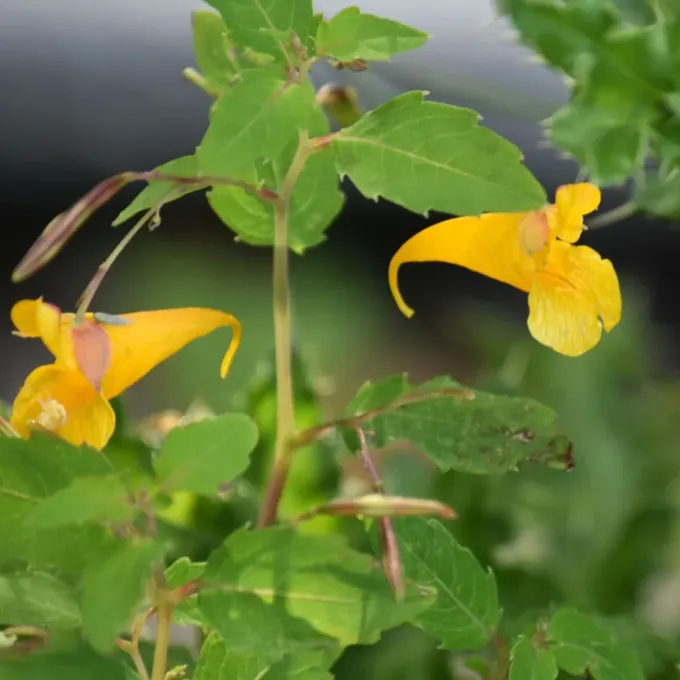
Touch-me-not balsam (Impatiens noli-tangere) is an annual herb belonging to the Balsaminaceae family. It is distinct for its succulent, translucent stems and bright yellow, spurred flowers that typically bloom during the summer months.
Botanically, the plant is adapted to moist, shaded environments, making it a common sight in forest understories and along stream banks. It grows rapidly, often reaching a height of up to one meter, and thrives in high humidity conditions.
Regarding soil requirements, it prefers nutrient-rich, humus-heavy substrates. The soil must maintain consistent moisture levels without becoming waterlogged, as the root system is sensitive to poor drainage and stagnant water.
Climate preferences focus on moderate temperatures and avoidance of direct sunlight. Intense solar radiation can cause leaf scorching and moisture loss, which are detrimental to the plant's delicate physiological processes.
The plant is widely recognized for its explosive seed dispersal mechanism. When the seed capsules are ripe, a slight touch causes them to burst open, scattering seeds several meters away, which ensures wide distribution in favorable forest habitats.
Main diseases and pests
The primary threats to Impatiens noli-tangere involve habitat loss and environmental drying. As a moisture-dependent species, any significant reduction in local water levels or canopy cover poses a severe risk to its survival.
Insect pests, particularly aphids, can cause significant stress by colonizing the succulent stems. Infestations lead to nutrient depletion and reduced vigor, leaving the plant susceptible to secondary infections.
Fungal diseases are another major concern, especially in areas with poor air circulation or overcrowding. Diseases such as powdery mildew can quickly spread across the leaf surfaces, hindering the plant's photosynthetic capacity.
Management of these threats in natural or controlled environments requires monitoring for early signs of decay or pest activity. Providing adequate spacing is essential to ensure proper ventilation and reduce fungal risks.
While the plant is hardy in its niche, human-induced environmental changes often lead to localized declines. Protecting forest ecosystems is the most effective way to preserve populations of this unique botanical species.