
Impatiens mirabilis
Impatiens mirabilis
Description
Growing requirements
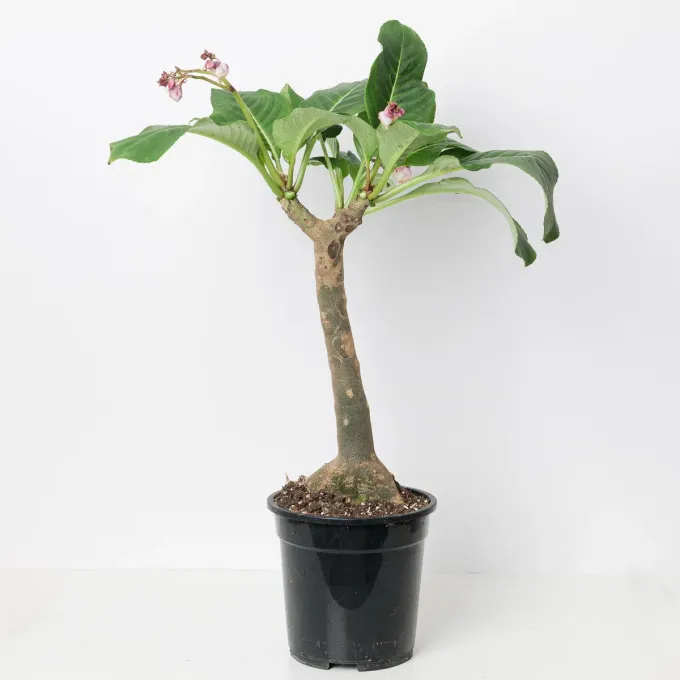
Impatiens mirabilis is a distinctive member of the Balsaminaceae family, famous for its succulent growth habit. Unlike traditional garden balsam varieties, this species develops a thick, woody stem that stores water, functioning similarly to a caudex.
Native to the limestone cliffs of islands near Thailand and Malaysia, this plant has evolved to thrive in crevices where soil is scarce. It relies on high atmospheric humidity to maintain its hydration levels during dry spells in its natural habitat.
In terms of cultivation, the plant requires a highly porous and well-draining potting medium. A mixture of perlite, pumice, and minimal organic matter is ideal to ensure that roots are never left in saturated, stagnant water.
The climate requirements include consistent tropical temperatures, ideally between 20°C and 28°C. While it needs plenty of bright light, direct exposure during the hottest hours of the day should be avoided to prevent scorching the delicate foliage.
Agronomic maintenance centers on irrigation control; watering must be sparse during the winter dormant phase to simulate the natural cycles of its native environment. Proper ventilation is also key to preventing physiological disorders.
Main diseases and pests
Fungal pathogens represent the most significant threat to Impatiens mirabilis, especially when the plant is kept in conditions with poor air circulation.
Pest pressures are typically limited to spider mites and mealybugs, which exploit the plant during periods of low humidity or stress.
Regular monitoring of the stem base and the underside of leaves is necessary to catch any infestations before they become widespread across the plant body.
Treatment involves the application of appropriate systemic pesticides and, if necessary, a complete repotting into fresh, dry substrate if root issues are detected.
Proper sanitation, including the removal of dead leaves and debris from the growing medium, is the best proactive step to minimize the risks of infection.