
Impatiens hybrids
Impatiens hybrids
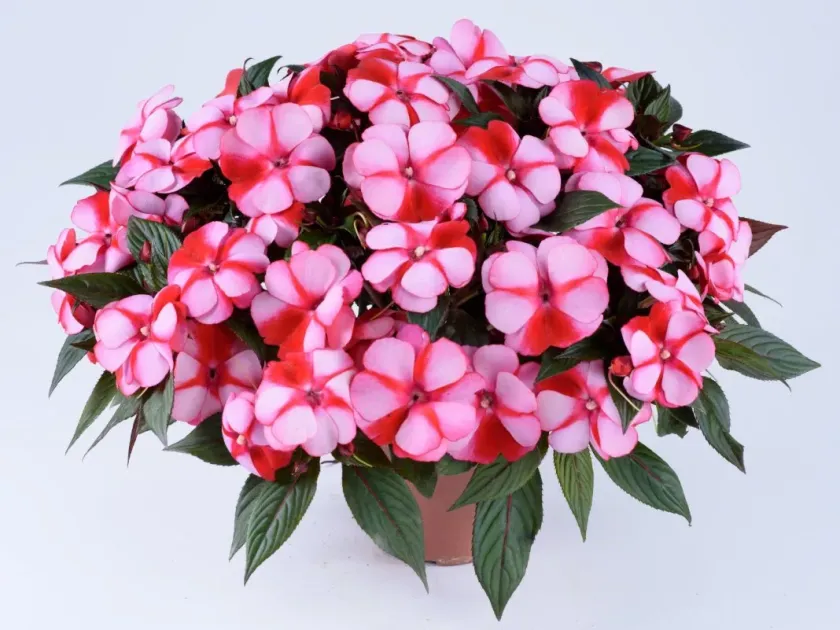
Description
Sowing dates
The sowing of Impatiens hybrid seeds should be carried out indoors in late winter, typically from February to March. To ensure optimal germination, the seeds require a warm environment with temperatures maintained between 22 and 24 degrees Celsius.
Since the seeds are extremely small and light-dependent, they must be surface-sown on a moist substrate without being covered with soil. A light dusting of vermiculite can be used to hold them in place while allowing sufficient light to reach the seeds.
Maintaining high humidity is essential during the incubation period, which is achieved by covering the seed trays with clear plastic or glass. Ventilation should be provided daily to prevent the development of damping-off disease in the emerging seedlings.
Pricking out the seedlings into individual pots is performed once the first two true leaves have developed. This process supports the growth of a robust root system, allowing the young plant to thrive before it is moved to its final location.
Transplanting to the garden or permanent containers must only occur after the risk of frost has completely passed. Being a tropical-origin plant, Impatiens are highly susceptible to cold injury and show stunted growth in chilly conditions.
Growing requirements
Impatiens hybrids belong to the Balsaminaceae family and are widely recognized for their exceptional ability to provide continuous color in shaded garden beds. They perform best in filtered sunlight, avoiding direct noon sun which can scorch their foliage.
The ideal soil for this crop is a loose, well-draining, and nutrient-rich mix. Good drainage is non-negotiable; while Impatiens appreciate consistent moisture, they cannot tolerate waterlogged soils, which lead to rapid root degradation.
Consistent watering is required to keep the soil evenly moist throughout the growing season. However, it is vital to water at the base of the plant to keep the foliage dry, which significantly reduces the incidence of fungal pathogens.
Feeding should be conducted bi-weekly using a balanced liquid fertilizer formulated for flowering plants. Excessive nitrogen should be avoided to prevent rank vegetative growth at the expense of floral development.
Environmental management involves keeping the plants in a temperature range of 18 to 25 degrees Celsius. In areas where summer temperatures consistently exceed 30 degrees, extra mulch or shade cloth should be used to protect the roots and foliage.
Main diseases and pests
Spider mites are the most common pest for Impatiens, particularly in arid climates or indoor settings. Regular misting and the application of suitable acaricides help in managing and preventing infestations before they compromise the plant's health.
Powdery mildew often appears as a white, dusty layer on the leaves, usually triggered by high humidity combined with poor airflow. Improving spacing between plants is the most effective cultural method to combat this disease.
Grey mold, or Botrytis, is a dangerous pathogen that thrives in overly damp environments. Infected stems and leaves must be promptly pruned and destroyed to prevent the spread of spores to healthy plant tissue.
Aphids frequently target the soft, growing tips of the plants, causing leaves to curl and yellow. They can be effectively managed with insecticidal soaps or systemic treatments that provide long-term protection.
Whiteflies can cause significant damage in protected culture environments such as greenhouses. Using yellow sticky traps and horticultural oils helps monitor and mitigate populations, ensuring the plants remain aesthetic throughout the season.