
Ileostylus micranthus
Ileostylus micranthus
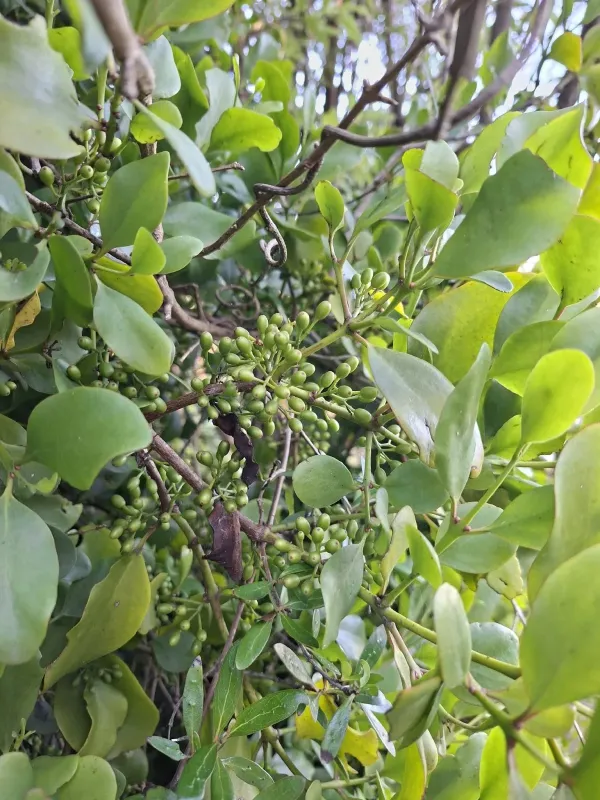
Description
Growing requirements
Ileostylus micranthus, commonly known as the small-flowered mistletoe, is a hemiparasitic plant belonging to the Loranthaceae family. It is endemic to New Zealand and is a notable representative of the local forest biodiversity.
As a hemiparasite, the plant relies on haustoria to attach itself to the branches of host trees. This specialized organ allows the plant to extract xylem sap, including water and nutrients, while still conducting its own photosynthesis to produce sugars.
The plant thrives in temperate climates with high atmospheric moisture. It typically populates forest edges and open woodland areas where it can access sufficient sunlight, which is crucial for its energy production cycle.
It does not require soil for growth, as it spends its entire life cycle attached to the host. The distribution of Ileostylus micranthus is strictly limited by the availability of suitable host trees and the presence of native birds that act as seed dispersers.
While not a commercial crop, the plant is significant for maintaining ecological balance within native New Zealand bush. It requires no human cultivation or agricultural management, flourishing naturally within preserved ecosystems.
Main diseases and pests
Habitat loss and the clearance of mature native forests represent the primary threats to the survival of Ileostylus micranthus across its natural range in New Zealand.
The presence of invasive mammalian species, such as possums, poses a significant risk as they often feed on the foliage and fruits of the mistletoe, drastically reducing its population density.
Changes in the local avian fauna disrupt the seed dispersal cycle, as specific native birds are essential for moving the seeds to new, suitable host branches in different trees.
Fungal infections in the host tree branches can occasionally lead to premature senescence of the mistletoe, particularly when the host's vitality is compromised by environmental stress or disease.
Increased competition from introduced weed species in canopy layers further complicates the plant's ability to establish itself on available host trees, putting pressure on remaining populations.