
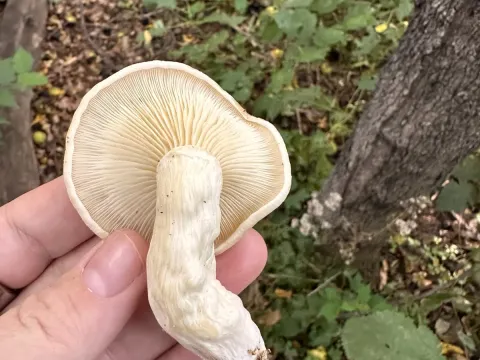
Hypsizygus
Hypsizygus Singer
Hypsizygus belongs to the Lyophyllaceae family. It is a wood-decaying fungus (xylotroph) that naturally occurs in the temperate zones of the Northern Hemisphere, typically found growing on the trunks of deciduous trees.
What the section contains


Hypsizygus
For successful cultivation, a well-prepared substrate based on hardwood, straw, or sunflower husks is required. The optimal moisture content of the substrate mixture should be maintained at 60-65% to ensure active mycelium growth.
Temperature control is a critical factor: the incubation stage requires a range of 20-24°C, while initiation of fruiting requires a decrease to 12-16°C. A sharp temperature drop often acts as a stimulus for the formation of fruiting bodies.
The culture is extremely sensitive to CO2 levels. During the growth of fruiting bodies, intensive air exchange is necessary so that CO2 concentration does not exceed 800-1000 ppm, otherwise, the mushroom stems become excessively elongated and deformed.
Air humidity in the growing chamber should be consistently high — at the 85-90% level. Using ultrasonic humidifiers or high-pressure nozzles allows maintaining the necessary parameters without forming water droplets on the mushroom caps themselves.
The yield of Hypsizygus directly depends on the biological efficiency of the substrate used. Under commercial conditions, when technology is followed, one can achieve up to 20-25% of commercial product relative to the dry weight of the substrate per flush.
In total, for a complete cultivation cycle, usually two, rarely three flushes of the harvest are obtained. The maximum yield of commercial product occurs during the second flush, after which the activity of the mycelium noticeably decreases and the risk of substrate contamination increases.
An important factor in increasing the yield is the density of block filling. Optimal density allows the mycelium to colonize the nutrient medium faster, which minimizes the time until the first primordia appear and reduces competition from mold fungi.
The use of selective strains allows for more uniform maturation of mushrooms within the block. This simplifies the manual harvesting process and helps avoid product losses due to over-ripening of individual specimens in a cluster.
The quality of the harvest is determined by the market appearance of the cap: it should be firm, without damage or signs of drying. When agricultural technology is followed, these mushrooms show excellent transportability and a long shelf life in chilled conditions.
The primary threats to the crop are competitive micromycetes such as Trichoderma and Aspergillus. They quickly colonize sterile substrate if the packaging material integrity is compromised or if the raw material undergoes insufficient heat treatment.
Bacterial infections caused by Pseudomonas can lead to the browning of fruiting bodies and the development of an unpleasant odor. Disease progression is facilitated by water stagnation on the mushroom surface and insufficient ventilation in the growing room.
Among pests, mushroom flies (sciarids) and phorids cause the greatest damage. Their larvae feed on the mycelium and tunnel through the stems of the fruiting bodies, making the product unsuitable for sale.
Disease prevention includes strict adherence to production sanitary standards. Regular disinfection of workspaces, air filtration, and the use of high-quality spawn significantly reduce the risk of pathogen infection.
When mold infestation sites are detected, blocks must be immediately isolated and disposed of. The use of chemical fungicides in mushroom farming is extremely limited, so priority is given to biological control methods and microclimate monitoring.
The harvest is performed when the mushroom cap reaches an optimal size but has not yet fully unfurled, with the edge remaining slightly curved downwards. This ensures the best taste qualities and market appearance of the product.
Mushrooms are harvested as entire clusters, cutting them off right at the base of the substrate block. It is important not to leave remnants of stems on the substrate, as they can become a source of decay and attract pests.
The harvesting tool should be sharp and disinfected. It is recommended to use disposable gloves to prevent the transfer of pathogen spores between blocks during harvesting operations.
After the first flush, the substrate surface must be cleared of "stumps" and damaged areas. Then, a short rest period of the block (3-5 days) is carried out, followed by short-term moistening to stimulate the next flush.
The harvested product should be immediately cooled to a temperature of 2-4°C. This slows down metabolic processes in the mushroom tissues and extends the shelf life to 7-10 days, provided that humidity in the packaging is maintained.