
Hypolepis punctata
Hypolepis punctata
Description
Growing requirements
Hypolepis punctata is a perennial herbaceous fern belonging to the family Dennstaedtiaceae. In the wild, this crop is found in tropical and subtropical climate regions, covering vast territories in East Asia, including Japan, China, as well as parts of Australia and Oceania.
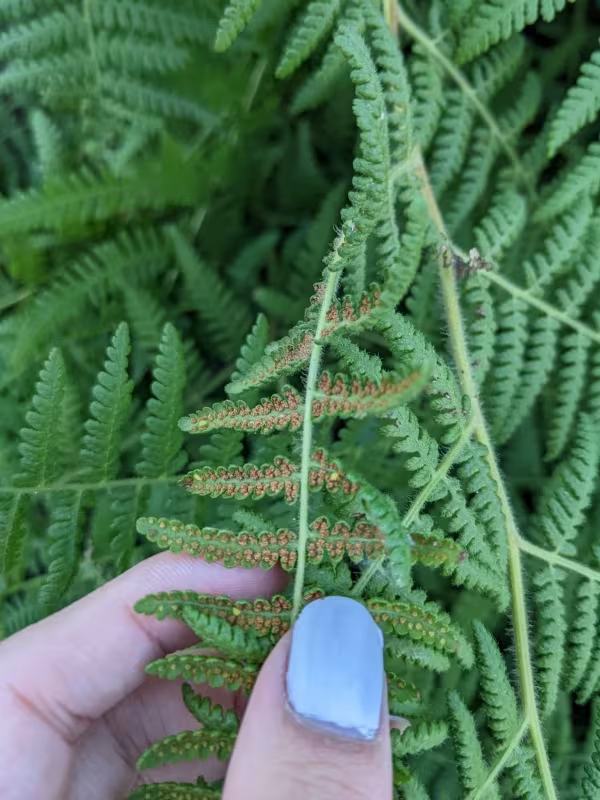
The plant possesses a creeping rhizome that allows it to spread actively, forming dense thickets. The fronds have a triangular or ovate-triangular shape, reach significant sizes, and feature a distinct texture, making the crop attractive for landscape design in warmer regions.
Successful growth requires shaded or semi-shaded areas, as direct sunlight can lead to scorching of the delicate leaf blades. In its natural habitat, the plant prefers forest edges and moist slopes where the soil is rich in organic matter.
Soil requirements include high moisture retention and good substrate aeration. Loose, slightly acidic or neutral humus-rich soils are ideal. It is crucial to provide adequate drainage to prevent water stagnation, which is detrimental to the root system of this species.
The crop is sensitive to sudden temperature fluctuations and prolonged frosts. Although the plant shows some adaptability, it develops best under stable average temperatures ranging from +18 to +25 degrees Celsius, requiring protection from desiccating winds.
Main diseases and pests
Despite its resilience, Hypolepis punctata can be affected by specific pests common to ferns. Scale insects and mealybugs are the most frequent culprits, feeding on leaf sap and leading to deformation and overall plant weakness.
Under conditions of high humidity and poor air circulation, there is a risk of fungal diseases, such as gray mold or root rots. Prevention involves maintaining a proper irrigation schedule and ensuring natural air circulation between individual plants.
To combat insect pests, it is recommended to use biological control agents or systemic insecticides if the infestation becomes severe. Regular inspection of the undersides of the leaves allows for the early detection and management of these problems.
When grown in greenhouses or indoor settings, it is important to avoid waterlogging the root zone, as this encourages the spread of pathogenic microorganisms. Using high-quality, sterilized substrate during planting significantly reduces the risk of soil-borne infections.
Overall, the plant is considered quite resistant to most standard diseases provided the agronomic regime is followed. The primary threat stems from choosing an inappropriate planting location where humidity and light levels do not meet the species' biological needs.